Many of you may have experienced doubts about certain future technological advancements.
Don't deny it.
A fear of technology, of artificial intelligence, of autonomous cars, of factories without workers,
of smart robots.
The panic of our jobs being taken away, of a few gaining power at the expense of others,
of inequalities multiplying, and even of machines controlling us and taking over the world.
Can machines really replace human beings?
Could they manage to teach themselves and take control of civilization?
What role will people play in a world of intelligent machines?
Folks, this fear of change, of the unknown, of the future... has become something like
our own 21st century phantom...
A phantom that is now moving throughout the planet.
Although...
You know what?
Truthfully, this isn't new.
The relationship between human beings and machines has never been simple, it has always
awakened mixed feelings.
Some fear them and others, on the other hand, see them as an opportunity for progress.
There are those who view them with distrust and those who adopt them as great allies.
Blessed machines.
And, of course, there are always those who predict that, because of all these machines,
the end of humanity is getting nearer.
By the way, before we continue.
What group do you belong to?
Tell me in the comments and also in the survey at the end of the video.
And of course, along with all these fears, the typical contradictions always arise:
We protest because the machines take our jobs and.
At the same time, we complain about the mundane and exhausting jobs, to which many employees
are subjected, especially the least qualified ones.
Or, for example, another very typical contradiction: almost every day we hear union leaders demanding
a shorter work day, while at the same time rejecting or wanting to halt technology, which
would actually lead to that.
Then... there's one of my favorites.
Many politicians continually denounce workers' low purchasing power, while they place obstacles
and even prohibit technologies that increase productivity and lower prices.
Have you thought about the taxi sector and platforms like UBER?
I have.
Of course, folks, in the end, adapting to new changes tends to be a matter of time.
Do you know a single person who worries about jobs that have disappeared because of mobile
phones?
Do you know anyone who wants to ban electric power because it hurt candle factory workers?
But… it's true that, as we mentioned before, the arrival of artificial intelligence...
has led to some new questions and new challenges.
But before we talk about all that, here's a bit of history
(FEAR OF CHANGES)
Many of the political speeches we hear every day pose nothing new.
And the alarms raised about technological changes come directly from such speeches.
See, from the very beginning, from the time human beings lived in caves, humanity has
progressed thanks to the use of tools.
To hunt, to gather, to cultivate, to conserve food or to improve productivity.
Tools have given us the chance to achieve better lives...
In fact, nowadays, humanity is experiencing the greatest welfare in all of history.
However, during a particular moment in history, tools and machines became something like an
enemy to be beaten, at least for a certain part of society: We're talking about the
industrial revolution.
Even though the Industrial Revolution meant a huge leap in terms of welfare for billions
of people.
The fact is that, at the time, machines began to be used widely… protests against them
multiplied and movements of all kinds emerged against the use of new technologies.
The basic argument was that so many machines would leave artisans, workers and peasants
out of work.
The most famous of these reactions was that of the Luddites, who at the beginning of the
19th century promoted attacks against factories, and especially against machines.
They hated them with all their might, and of course, had to destroy them because a world
with machines would be terrible.
Between you and me... thank goodness they didn't get their way.
Can you imagine what life would be like?
But... before we continue… here's a question.
What do you think about trains?
Do you like them?
Do you think they are useful?
Or do you consider them dangerous?
You think they're worth having around, right?
Well...
I think that President Martin Van Buren, the eighth president of the United States, wouldn't
agree with us...
As Michael Cox and Richard Alm tell us in their book "Myths Of Rich And Poor: Why
We're Better Off Than We Think"; in 1829 Martin Van Buren was very concerned about
the dangers of the railroad.
He was so concerned, that he even wrote to President Andrew Jackson to ask him to push
a railroad ban.
You heard that right.
Martin Van Buren thought... that the railroad would risk the jobs of thousands of people
who worked in deliveries and in canals and boat construction.
In fact, since Martin Van Buren also thought that ships were essential to defend the United
States, he considered the railroad to be a serious threat to national security.
And that's not all... in the same letter he addressed to President Andrew Jackson, Van
Buren also warned about the danger a transportation system that moved at a whopping 24km per hour
posed to people's lives.
How crazy is that?
Yes, I know, these arguments may seem ridiculous nowadays... but at the time many people took
all these ideas very seriously.
And….
okay, it's true...
technological changes have caused difficulties throughout history.
Think, for example, about what happened with the development of telecommunications.
See, when telephony became massive, in its early days when you wanted to talk to someone...
you gave an operator the name and surname of the person you wanted to talk to...
By the second half of the 20th century, which wasn't so long ago… tens of thousands
of operators worked connecting long distance calls.
Which, of course, made calls very expensive.
However, by 1980, technology allowed communications to be made directly, without intermediaries...
suddenly the operators became irrelevant… and calls became very cheap.
So, what happened to all those people?
Well... they had to find new jobs.
Yes, I know, adapting isn't always easy... but evidently this change in telephony was
very beneficial for society as a whole.
Communications became easier and much cheaper.
That's why... the important thing is to generate loads of employment opportunities within a
society and make it relatively easy to change jobs.
Can you imagine if a state, a government had forbidden these positions from disappearing?
That country's communications would still be very slow, people would sometimes have
to wait hours to speak with someone, and calls would be very expensive.
All of this would have made the economy and the total number of jobs in that country not
very good,
Because folks, we tend to forget one thing: now, as you watch this video, you're going
through the time in history where technology is used the most... and you know what?
It's also the time where more people work.
In fact, it's curious but the countries that use the most robots are precisely those
that suffer the least unemployment.
Not bad, right?
Now... some of you may be thinking…
Simon....
Artificial intelligence is going to be different.
Well, let's delve into that.
(THE TIME OF AI)
Friends, the time of artificial intelligence and robots is here.
Every day we use more products and services that function with artificial intelligence...
from voice assistants to the autonomous cars that are already beginning to circulate.
And, yes, the speed with which this intelligence progresses is impressive.
We could say that artificial intelligence involves applying the enormous power of computers
to solve problems.
Well, in the last 30 years, the cost of computing capacity became 200 million times cheaper.
To give you an idea of what this means, we could say that if the car industry's cost
had evolved in the same way… today a high-end car would cost only four ten-thousandths of
what it does....
Which would be less than a Venezuelan Bolivar--a Bolivar under Nicolás Maduro.
This evolution is, precisely, what explains why today a PlayStation 4 costs less than
400 dollars, even if it is about 2,000 times more powerful than the Cray-2 supercomputer,
one of the most famous computers in history, which beat all the records in 1984.
And... this computer, unlike the Play Station 4, weighed two and a half tons and cost 18
million dollars.
Today, a play station 4 can perform 1.84 trillion floating point operations per second...
This would take a person approximately 60,000 years to do.
And it's precisely that enormous calculation capacity that is allowing AIs to replace us
in several tasks.
For example, sooner or later, the autonomous car will end up imposing itself...
We won't be able to compete with its calculation capabilities, especially now that these machines
have managed to perceive their environment thanks to cameras, microphones and sensors.
So yes, based on how things are evolving, it seems almost certain that in a relatively
short time... many mechanical and routine jobs... from factories to the field... will
be carried out by "smart machines".
But this means that productivity... will increase a lot... and with it most people's well-being.
( "I think in the next 30 years, people only work four hours a day and maybe four
days a week [...] My grandfather worked 16 hours a day in the farmland and thought he
was] very busy.
We work eight hours, five days a week and think we are very busy."
Jack Ma, Chairman of Alibaba)
And no doubt… during this time many new jobs will be created... of all kinds... because
see, the question we may want to ask ourselves is, are machines close to surpassing us?
Well... for some tasks, yes, but for many others, no.
See, machines can compute very quickly, but they have problems learning.
Computers are very inefficient learners, they only recognize patterns after analyzing something
an overwhelming number of times.
That's our great advantage.
( The most advanced machine learning systems require thousands of examples to acquire new
concepts, while humans can generalize from a few examples.
Many animals can learn from a limited number of experiences, but humans seem particularly
good at generalizing based on a few amounts of experiences.
Greg Corrado, Stanford neuroscientist and Director of Augmented Intelligence at Google.)
This explains why nowadays, humans are far superior in areas such as creativity, innovation,
intuition and empathy.
Folks, nobody can predict the future, but until now machines have always meant more
jobs and better welfare for all.
In the near future it's almost certain that what is already happening will continue to
happen: some jobs will be destroyed and many others will be created... not only highly
qualified ones... but all kinds.
And probably, working hours will decrease and real wages will increase.
Beyond that, it's very hard to predict what may or may not happen, but...
Let's not fall into the same mistakes that the former US president, Martin Van Buren,
fell into due to his fear and his rejection of the railroad.
There are still many challenges to overcome in the world, such as poverty and environmental
sustainability.
And machines can help us a lot.
But now it's your turn, what's your perspective on AI?
Leave your answer in the comments as well as in the survey.
So I really hope you enjoyed this video, please hit like if you did, and don't forget to
subscribe for brand new videos.
Don't forget to check out our friends at the Reconsider Media Podcast - they provided
the vocals in this episode that were not mine.
Also, this channel is possible because of Patreon, and our patrons on that platform.
Please consider joining them and supporting our mission of providing independent political
coverage.
And as always, thanks for watching!


 For more infomation >> Police Scour Rose Bowl Parking Lot For Clues In Deadly Stabbing - Duration: 1:48.
  For more infomation >> Feinstein and Her Team Hit the PANIC SWITCH as Calls for a Special Counsel Grow - Duration: 6:34.
  For more infomation >> Shahs Of Sunset: Go To Vegas For MJ's Bachelorette Full Scenes (Season 7, Episode 8) | Bravo - Duration: 7:16.
 For more infomation >> 로즈힙 효능 8가지 알아볼게요 ► Skills for Life - Duration: 3:56.
  For more infomation >> Trump hit a homerun for US dairy farmers: Rep. Faso - Duration: 6:59.

 For more infomation >> Confirmation crisis for Kavanaugh - Duration: 6:24.
  For more infomation >> IKEA hiring for 250 positions at San Antonio-area store - Duration: 0:30.
 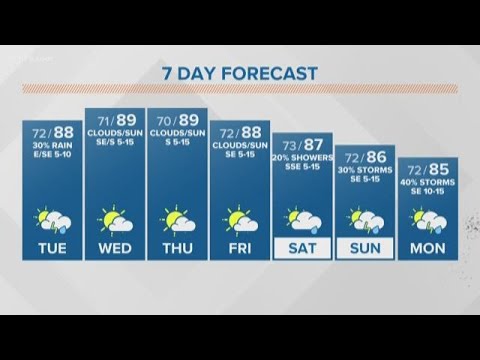 For more infomation >> First Alert Forecast: Chances for scattered showers this week - Duration: 3:19.

Không có nhận xét nào:
Đăng nhận xét