[APPLAUSE]
[SINGING] [MUSIC PLAYING]
[APPLAUSE]
FELICIA GASKINS: Good evening, and welcome to Singing
For Justice Songs Of The American Civil Rights Movement
presented by the WSU University singers.
Tonight's program will showcase an important chapter
in the history of our country.
We have gathered here in honor of Black History Month.
And certainly, the Civil Rights Movement
was a key event in that story.
As we all know, the movement centered
on the rights, protests, and leadership of black Americans
as they struggled to address a shortcoming
of American society.
The Civil Rights Movement is an important period
in American history.
Throughout the movement, African Americans were supported
by other Americans of all colors, races, and ethnicity's.
As the movement pushed America towards the ideals
of democracy, freedom, and equality,
the Civil Rights Movement impacted the lives of us all.
Tonight, we will celebrate the movement's history
by focusing on its music.
African American cultural traditions
where the integral part of Civil Rights efforts, especially
singing and song.
The music of the Civil Rights Movement
grew out of black vocal traditions
that go back to Negro spirituals and slave songs
and that led to the gospel and the blues.
Movement music was tied to this musical tradition, as well as
a tradition of protest songs from the American Labor
Movement.
During the Civil Rights Movement,
ordinary people did extraordinary things.
The era was made of people of all ages
from different backgrounds taking extreme risk
and showing great courage.
Music helped them maintain their bravery in the midst of terror,
and raise their spirits in the face of defeat.
Police could arrest a black person.
They could demean them.
But they could not stop them from singing.
Freedom fighter, John Lewis, put it this way.
It was the music that gave us the courage, the will,
the drive to go on, in spite of it all.
Now let us turn to the movement and its music.
[APPLAUSE]
[MUSIC "BLACK NATIONAL ANTHEM"]
FELICIA GASKINS: Please, be seated.
[APPLAUSE]
Of the 16 million US soldiers that
fought against Hitler's Germany, Mussolini's Italy,
and Hirohito's Japan, one million of those soldiers
were African American.
As they risked their lives fighting oppression
around the globe, they could not ignore
the injustice they, and their families, experienced at home.
Black soldiers served in segregated units
and traveled through the US on segregated trains,
while German and Italian prisoners
were granted admission into whites only rail cars.
They also found troubling contradictions
when they were accepted and respected while
in Italy and France but returned to American apartheid
in schools, transit, housing, voting, and employment.
As World War II came to a close, many soldiers
felt a determination to do something,
to address racial inequities.
And this was a major inspiration of the Civil Rights Movement.
By most accounts, the Civil Rights Movement
got underway in 1954.
The reality is it started years prior as a young Harvard
trained attorney named Charles Hamilton Houston developed
a plan to challenge the Supreme Court.
Separate but equal doctrine.
In previous rulings, the Supreme Court
declared separate but equal.
Meaning that separate or segregated schools
were fine, as long as they were of equal quality.
This was the official policy of the US for the first half
of the 20th century.
But the schools for black and white children
were never equal.
During Houston's tenure at Howard Law School,
he trained and mentored many lawyers,
such as Thurgood Marshall, to dismantle segregation piece
by piece.
In 1954, Brown versus Board of Education
was decided by the US Supreme Court.
The case revolves around the question of separate schools
for white children and black children.
One example was a school called R.R Moton, which
was the only black high school in Prince Edward
County, Virginia.
Moton's building was dilapidated.
And the classrooms were overcrowded.
The textbooks were used editions that the white school no longer
wanted with pages missing, and obscenities written in them.
And when it rained, the roof leaked.
John Stokes, a Moton student, explained
the impact of these conditions.
As a person looks around and he sees a brick
building for another race, and he
has to walk by that brick building for two miles
to a school that's wooden, and that school
has an outdoor toilet.
And when he goes to that outdoor toilet,
he looks, and he sees maggots up there right near
where he has to sit.
That's demeaning to another human being.
In April of 1951, a small group of Moton students
led a student strike to push for a new school.
Soon after, the National Association
for the Advancement of Colored People, or NAACP,
was called in, and persuaded the students and their parents
to sue for integration.
In response, the Ku Klux Klan threatened
black resident's, and burned a cross the athletic field.
A symbol of Klan violence.
But the black community held firm.
And the Prince Edward case would become part of the Brown case,
along with four similar lawsuits from around the country.
After years of legal battles, on May 17, 1954,
the US Supreme Court reversed its earlier ruling,
and declared that segregation in education was unconstitutional.
This was a great victory for African Americans.
Yet, there was a catch.
Instead of ordering schools nationwide
to integrate immediately, the court
set a vague goal for implementation.
The Supreme Court ordered that integration
be established with all deliberate
speed, which gave resistance school
districts a legal loophole.
In some cases, it took 10 years or more to comply.
Indeed, laws would not be enough.
A movement was needed to ensure that the legal reforms were
enforced.
[MUSIC - "I'M ON MY WAY"]
[APPLAUSE]
Sometimes as we look back in history
to a time we have not personally known,
it can be hard to imagine what it was like.
This is also true as we try to understand
each other's experiences across differences of race, class,
and gender.
At this time, African Americans experience violence
directed at them from white Americans,
which was an all too common feature of American life,
at the time.
One example came in 1955, one year after Brown versus Board.
That year, a 14-year-old boy from Chicago
named Emmett Till was killed in Money, Mississippi
for violating the social customs of Jim Crow segregation.
Till's mother sent him to Mississippi
to visit some relatives.
When he left, she told him be careful.
If you have to get down on your knees
and bow when a white person goes past, do it willingly.
But like many 14-year-olds, Till did not
heed his mother's warnings.
One day during his vacation in Mississippi,
some local boys dared him to speak to a white woman working
in a store.
Following a double dare, Till reportedly
said, "bye, baby", and left.
What was his crime?
He jokingly said bye, baby to a white woman.
Such an act was not taken lightly
at this time in the south.
Romantic interactions between black males and white females,
no matter how benign, were taboo.
In some cases, there were even laws
against reckless eyeballing, or black men looking
at white women the wrong way.
The woman was Carolyn Bryant, a 21-year-old beauty queen,
who was working in her husband's store.
Three days later, Bryant's husband, Roy,
and his half brother, John Milam seized
Till in the middle of the night with the intention
of teaching him a lesson.
Soon after, Till's body was found in the Tallahassee River.
One of his eyes was gouged out.
Part of his forehead was crushed in.
And there was a bullet lodged in his skull.
Heartbroken and outraged, Till's mother
had his body shipped back to Chicago,
and had an open casket at the funeral
so that the world could witness the tragedy.
Yet, when the case went to trial back in Mississippi,
regardless of the evidence, the jury
dismissed the charges against Bryant and Milam.
The unfortunate example of Emmett Till's murder
reflects the direct, individual, and cruel side
of Jim Crow's segregation.
The violence and dehumanization that Till's murder represented,
along with the hope of Brown were two major catalyst
for future events in the Civil Rights Movement.
[MUSIC PLAYING]
[MUSIC "A CHANGE IS GONNA COME"]
[APPLAUSE]
Later, in 1955, the same year that Emmett Till was killed,
another key event in the Civil Rights Movement took place.
On December 1, Rosa Parks was arrested
when she refused to give up her seat on a bus in Montgomery,
Alabama.
This led to the Montgomery Bus Boycott.
In her autobiography, Parks' wrote, "people always
say that I didn't give up my seat because I was tired.
But that isn't true.
I was not tired physically, or no more tired
than I usually was at the end of a working day.
I was not old, although, some people have an image of me
as being old then.
I was 42.
No, the only tired I was was tired of giving in.
Parks was also an activist who had worked in the NAACP
for over a decade.
By this time, several activists had already
discussed the idea of a bus boycott
but needed the perfect case to rally around.
Parks was not the first person to refuse to give up her seat.
In fact, earlier that year, 15-year-old Claudette Colvin
made the same bold statement.
But Parks was crucial as a unifying symbol
because she was well known and well respected
in the community.
So once word got out about her arrest,
planning for the boycott quickly gone under way.
The bus system was a focal point for protests
for a number of reasons.
Black riders had to give up their seats for white riders.
They had to stay out of the first 10 rows, which
were reserved for whites, and stand next to empty seats
if the black section was full.
Blacks were often asked to pay in the front of the bus.
Then, exit and re-enter through the rear door.
And occasionally, the bus driver would pull away
before they reboarded.
This kind of direct spitefulness,
along with the general bus policies,
was a continual insult to black writers,
especially since they had to pay the same fair
but were not given equal treatment.
Montgomery blacks rode the buses regularly.
And their experiences on the buses
were a daily blatant reminder of the injustice
they faced in America.
Parks was arrested on Thursday, December 1.
And it was quickly decided that the boycott
would start the next Monday.
On a cold Monday morning, the boycott
started with nearly full participation
by the African Americans of Montgomery.
That night, the Montgomery Improvement Association
was formed to continue the boycott.
And the young Reverend Martin Luther King
was selected as its leader and spokesman.
Martin Luther King believed that, should change be made,
risk must be taken.
He asked his African American brothers and sisters
to wade in the water with him.
And continue to work for equality.
Working together, the black citizens of Montgomery
maintained their bus boycott for over a year.
To do so, they endured violence and intimidation.
Some, like Rosa Parks, were fired from their jobs.
Police would harass carpool drivers.
Young whites in speeding cars shouted obscenities,
tossed rotten eggs, and squeeze balloons filled with urine
on black pedestrians.
The homes of Martin Luther King and E.D Nixon,
the head of the local NAACP, were both bombed.
Yet, the boycott lasted 381 days and ended in triumph
through the use of nonviolent protest.
In 1956, the US Supreme Court ruled
that Montgomery's segregation laws were unconstitutional.
And the boycott ended soon after.
The news was national and historic
because it displayed the power of boycotts
and other mass action protest.
And it led to several similar boycotts
as more people waded in the water of the activism.
[MUSIC PLAYING]
[MUSIC - "WADE IN THE WATER"]
[APPLAUSE]
In Little Rock, Arkansas, nine high school students
tried to integrate Central High School.
After three years of delays and negotiations.
It was decided that nine black students
would enroll in Central High in the fall of 1957.
There were six young ladies and three young men that became
known as the Little Rock Nine.
Their experience throughout the school year
would be full of challenges and require great courage.
First, the governor sent National Guard troops
to stop the students from entering the school.
When Elizabeth Eckford tried to enter
the school for the first time, Guardsmen used their bayonets
to block her path.
And an angry mob shouted lynch her, lynch her.
About three weeks later, following a federal court order
removing the governors troops, the students, again,
tried entering the school.
This time, they got inside but soon
had to leave because the school was overrun by angry whites who
threatened to lynch them.
Responding to domestic and international pressure,
President Eisenhower reluctantly sent federal troops
to protect the black students.
Once school got underway, the turmoil continued.
While some white students were nice to the blacks,
many others shunned and abused them and their white friends.
Gloria Ray was shoved down a stairwell
and forced to dance as firecrackers
were thrown at her feet.
Melba Pattillo was doused with raw eggs
and nearly blinded by a chemical thrown at her eyes.
Despite the hardships, the Little Rock Nine persevered.
And at the end of their first, Ernest Green, a senior,
graduated.
No one clapped when green crossed the stage
for his diploma.
But as he said, I had accomplished
what I had come there for.
[MUSIC PLAYING]
[SINGING]
Beginning in 1960, the Civil Rights Movement
added new dimensions.
Particularly, as younger activists
moved into roles of leadership.
This started when for freshman students at North Carolina ANT
college held a sit-in Greensboro, North Carolina.
In high school, they'd learned about the Little Rock Nine,
been active in NAACP youth groups,
and heard Martin Luther King speak.
By the time they got to college, they
wanted to make a statement against discrimination.
They chose to protest Woolworth, a business that
included a department store, a snack bar, and a sit down
diner.
Black customers were allowed to shop at the store and the snack
bar, but we're not allowed to eat in the diner.
Just the bus policies that were challenged in Montgomery,
this discriminatory custom was symbolic of black Americans
second class citizenship.
On Monday February 1, 1960, these four college freshmen
entered the diner professionally dressed
with notebooks and pencils in their hands.
All of us were afraid, they'd later admitted.
But we went ahead and did it.
Once inside, the waitress refused to serve them.
A few customers cursed them.
And the manager tried to have them arrested.
Yet, they were not arrested or harmed that day.
After about an hour of sitting there, the diner closed.
And students left.
Following this instance, word of the sit-in
quickly spread, and protests continued.
Each day that week, more and more students
joined the sit-ins.
And by Saturday, hundreds of students
jammed into Woolworth and other Greensboro stores.
By the end of the month, a sit-in movement
emerged with protests in 30 different locations
in seven states.
As the movement gained more attention,
protesters endured violence and abuse.
But there efforts forced Woolworth's
to change its policy and desegregate the lunch
counters at the end of 1961.
[MUSIC "I'M GONNA SIT AT THE WELCOME TABLE"]
[APPLAUSE]
One year after the sit-in movement began,
think the youthful spirit of the sit-ins recaptured national
attention during the Freedom Rides.
Beginning in 1961, of the Congress of Racial Equality
or CORE, decided to test federal laws that banned segregation
on southern highways.
A situation where laws protecting black civil rights
already existed but were not being enforced.
The rights began on May 4, 1961 when
seven black and six white CORE volunteers
left Washington, DC planning to ride
through several southern states.
Although they were breaking no laws,
they were soon harassed and attacked.
In South Carolina, Freedom Riders
were punched and kicked when they
tried to enter a whites only bus station waiting room.
In Alabama, the bus was stopped, set on fire,
and the core volunteers suffered a brutal beating.
Faced with the mounting violence and the refusal of the Kennedy
administration to intercede on behalf of the lawful Freedom
Riders, a successful protest meant, simply,
completing the journey.
As the volunteers were injured or jailed,
new ones came to replace them.
On May 24, the Freedom Rides reached Jackson, Mississippi.
This would mark the official end of the campaign.
But similar core protests with continue throughout the year.
In November, the Interstate Commerce Commission
implemented regulations prohibiting
segregation in brush, in bus, and train terminals.
And although some localities continued to defy the policies,
this was another victory for the Civil Rights Movement.
In the second half of our program,
we will learn about how the Civil Rights Movement continued
to break down barriers.
As we break for intermission, pause and reflect
on this vibrant history.
[APPLAUSE]
[MUSIC "KEEP YOUR EYES ON THE PRIZE"]
[APPLAUSE]
In 1963, Martin Luther King and others
led another set of protests.
This time, in Birmingham, Alabama.
Named Project Confrontation or Project C,
this campaign was intended to use nonviolent protest
to provoke a response from local officials causing them
to show the violence and cruelty that
maintained racial segregation.
The campaign began in early April
as King, Reverend Fred Shuttlesworth,
and others led marches through the city.
Before the first week of demonstrations was over,
police began using attack dogs and night sticks
on the marchers.
On April 11, the police served King and Shuttlesworth
an injunction barring them from leading anymore demonstrations.
Two days later, they defied the court order.
And both were promptly arrested.
On April 20, King and Shuttlesworth
were released from jail and found Project C nearly
defeated, due to a dwindling number of people who
were willing to demonstrate.
A new tactic of including children in the protest
was proposed.
The idea of allowing high school and middle school children
to march and risk being beaten and arrested
produced great apprehension and debate
among the local black community.
But many youth wanted to participate.
And unlike their parents, they could
protest without risking being fired from their jobs.
The decision to include the children was eventually made.
And more than 1,000 of them marched on May 2.
The kids, some as young as six-years-old,
marched again the next day.
And with the city jails filling up,
police, again, reacted with attack dogs, bully clubs,
and high powered water hoses.
The spray of the water was so strong it
could rip the bark off a tree and tear bricks
from their mortar.
Many of the youth were injured as it all
unfolded in front of the news cameras
broadcasting these atrocities nationwide.
The marches and protests continued until May 7.
After a month of demonstrations and mounting pressure
from the Kennedy administration, the Birmingham chamber
of commerce negotiated a truce.
The business leaders agreed to desegregate public areas,
like lunch counters and public bathrooms,
and hire black employees in downtown stores.
Later, city officials also disaggregated the library, golf
courses, and public schools.
Project C was one of the foremost campaigns
of the entire Civil Rights Movement
and clearly a success as 50 other cities also
integrated to avoid similar demonstrations
due, in part, to the dedication of these young, brave
protesters.
[MUSIC "THIS LITTLE LIGHT OF MINE"]
[APPLAUSE]
Later that same year, the largest Civil Rights
demonstration of all was held.
The 1963 March on Washington.
The theme of the march was jobs and freedom.
However, the protests immediately goal
was to ensure Congress passed the Civil Rights Bill recently
proposed by President Kennedy.
In the aftermath of Project Confrontation,
Kennedy had finally put the full weight of the presidency
behind the Civil Rights Movement.
Speaking to a national audience, he said, "100 years of delay
have passed since President Lincoln freed the slaves.
Yet, their heirs, their grandsons, are not fully free.
They are not yet freed from the bonds of injustice.
They are not yet freed from social and economic oppression.
And this nation, for all its hopes and all its boast,
will not be fully free until all its citizens are free."
President Kennedy then called on Congress
to pass a Civil Rights bill that would address discrimination
and voting rights across the country.
The March on Washington was intended
to make sure Kennedy remained committed
to the bill's passage.
As the day of the march approached,
many feared it would be a colossal failure.
Yet, on August 28, a hot and humid day, 21 special trains,
1,514 buses, and countless carpools
brought 250,000 marchers to Washington, DC
from all over the country.
Every major Civil Rights leader was in attendance.
And many gave speeches to the enormous crowd.
Several celebrities of the time also
attended, such as Lena Horne, Paul Newman, Harry Belafonte,
Charlton Heston, Sammy Davis Jr. and Marlon Brando.
The festive event featured music performances
by Joan Baez, Peter Paul and Mary,
and the SNCC Freedom Singers singing Blowing In The Wind.
More than 2,000 journalists covered the march,
broadcasting the developments nationally and internationally.
The high point of the gathering was
Doctor King's culminating address,
the I Have a Dream speech.
In the minds of many, the March on Washington
was the climax for the entire Civil Rights Movement.
The march, along with the Birmingham Campaign,
resulted in congressional action as the organizers had hoped.
During the following year, the Civil Rights Act of 1964
was passed, which gave the federal government new powers
to fight racial discrimination and outlawed segregation
nation.
[MUSIC - "STAYED ON FREEDOM"]
[APPLAUSE]
Following the passage of the Civil Rights Act of 1964,
the next major challenge was to ensure
African Americans in the South could vote.
Technically, blacks got voting rights in 1870
with a passage of the 15th amendment to the US
Constitution.
But they were effectively denied this constitutional right
through a network of local voting restrictions,
such as expensive poll taxes, threats, intimidation, and even
dishonest literacy test.
Here, again, the struggle unfolded in Alabama
because activists believed a breakthrough
there would have a wide impact all over the South.
Beginning in 1963, members of the Student Nonviolent
Coordinating Committee, SNCC, began a campaign
to register voters in Selma, Alabama and other nearby towns.
Despite modest success, the effort
was overwhelmed by harassment and abuse from local officials.
Particularly, after a local newspaper
printed pictures and names of those trying to register.
By 1965, the campaign was nearly destroyed.
So the organizers asked Dr. King and his organization to help,
and King agreed.
On January 18, 1965, King and John Lewis of SNCC
led a march in attempt to register black voters.
Then, on February 1, King was again arrested.
While King was in jail, the voter registration effort
got an unexpected boost from Malcolm X who spoke in Selma
and urged local officials to negotiate with King.
He said, "the white people should thank Dr. King
for holding people in check.
For there are others who do not believe in these measures."
The marches to the courthouse continued into February
amid thousands of arrest.
A turning point came on February 18.
That day, in a town near Selma, a group
of Civil Rights protesters again attempted to register
and were brutally beaten by Alabama state patrolman.
Among the turmoil, a 26-year-old army veteran
named Jimmy Lee Jackson was shot as he
tried to protect his mother from the policeman's blows.
Jackson later died from this wound.
Enraged by news of the death, the activists
planned a five day march from Selma
to Montgomery to confront the governor
and express their anger.
As the planned action drew near, King fled to Atlanta
because he had received an unprecedented amount of death
threats.
On Sunday March 7, 600 participants
left Selma's Brown Chapel two by two
singing Ain't Gonna Let Nobody Turn Me Round
and marched several blocks crossing the Edmund Pettus
Bridge.
Once they crossed, they were halted
by a mass of state troopers.
The mayor shouted in a bullhorn that the demonstrators
had two minutes to turn around and go back to your church.
You will not be allowed to march any further.
The protesters bravely stood their ground.
And the troopers attacked.
What resulted was the most savage police
riot of the Civil Rights era.
The troopers blinded the marchers with tear gas,
then beat them with night sticks.
One trooper swung a rubber tube with barbed wire
wrapped around it.
Men, women, and children were savagely beaten.
John Lewis suffered a fractured skull.
And five women were beaten unconscious.
A 14-year-old girl had to have seven stitches in her face,
and 28 more in the back of her head.
This day would come to be known as Bloody Sunday.
Television news programs broadcast
footage of Bloody Sunday prompting thousands
of blacks and whites to flood the White House with letters
calling for abuse to stop.
King returned on March 9 and led another unsuccessful march.
To protect the third attempt, President Lyndon Johnson
federalized the Alabama National Guard
and sent 2,000 army troops, FBI agents, and US Marshals,
along with a dozen planes and helicopters
to prevent sniper and bomb attacks.
On March 21, a multiracial body of 3,200
set out, again, and reached Montgomery on the 25th.
Reaching the state capital, King gave another powerful speech.
And the joyous crowd sang We Shall Overcome.
With all the tragic events of the Selma campaign, Johnson
and the Congress, again, had to respond.
In 1966, Congress passed the Voting Rights Act
that would enforce the 15th amendment,
and remove literacy tests and other voting restrictions.
This legislation, along with the Civil Rights Act,
where the two crowning achievements of the Civil
Rights Movement.
[MUSIC "AIN'T GONNA LET NOBODY TURN ME ROUND"]
[APPLAUSE]
Following the Selma Campaign and the Voting Rights Act,
the Civil Rights Movement gradually came to an end
as activists and leaders struggled to identify
what direction to move next.
The initial Civil Rights Goals had largely
been addressed by 1966 with legislation and court
rulings that outlawed segregation
in education, public accommodations, and voting.
Yet, racial inequalities remained.
And many activists believed the struggle needed to continue.
But they were unsure how.
One approach championed by some was a continued emphasis
on integration and individual opportunity.
Another approach held that not just individuals
but the black community, as a whole,
needed to be empowered and looked
to the ideas of Malcolm X for guidance.
Following the example of Malcolm and others,
the Black Power Movement emerged in 1966,
led by groups like the Black Panther Party for self defense.
Martin Luther King charted a third path
believing that the next great issues of the movement
should be opposing the Vietnam War and addressing poverty.
In December of 1967, King announced his plan
to lead a Poor People's Campaign the following year that
would fill the jails, boycott major industries,
and occupy factories until Congress allocated $30 billion
to address poverty.
He proposed the money be spent on programs
for full employment, universal health
insurance, a guaranteed annual income, and 300,000 low cost
housing units each year.
Unfortunately, King was assassinated
before this campaign began.
In the latter '60s, King was also
increasingly vocal in his criticism of the Vietnam War.
In one speech called Beyond Vietnam,
he said, "We must stop.
I speak as a child of God and a brother
to the suffering poor of Vietnam.
I speak for those whose land is being laid waste,
whose homes are being destroyed, whose
culture is being subverted.
I speak of the poor of America who
are paying the double price of smashed hopes at home
and [? tell ?] death and corruption in Vietnam.
"I speak as a world citizen.
I speak as one who loves America.
To the leaders of our own nation,
this great initiative in this war is ours.
The initiative to stop must be ours."
In the same speech, King also criticized American society
saying that we, as a nation, must undergo
a radical revolution of values that
will shift from a thing oriented society
to a person oriented society.
Dr. King was widely criticized for making statements
like these, eaten by other Civil Rights leaders.
And these statements may have also led to his assassination.
King gave the Beyond Vietnam speech on April 4, 1967.
And on the same day, one year later, he was assassinated.
In a tragic final irony, Martin Luther King,
the champion of nonviolence, was shot dead on a hotel balcony
in Memphis, Tennessee.
[MUSIC PLAYING]
[APPLAUSE]
[MUSIC - "AMAZING GRACE"]
[APPLAUSE]
Now as we conclude tonight's program
with the memory of this great man
and the memory of the scores of great women and men
that created this great movement,
let us ponder the successes of the past and weighty challenges
that remain.
As King said, "Let us rededicate ourselves
to the long bitter but beautiful struggle for a new world.
We all have a choice about what principles to hold,
what values to support."
And as King concluded, "if we will make the right choice,
we will be able to speed up that day, all over America,
and all over the world when justice
will roll down like waters and righteousness
like a mighty stream."
[MUSIC PLAYING]
MARILYN KELLER: I'd like you all to stand, please, with this.
And link hands and arms as they did during the struggle.
[MUSIC - "WE SHALL OVERCOME"]
[APPLAUSE]
FELICIA GASKINS: Through the leadership and sacrifice
of military veterans, lawyers, ministers, students,
and other everyday people, and leading activists
like Charlton Heston, and Charles Houston, and Thurgood
Marshall, and Martin Luther King, and Rosa Parks,
and Malcolm X, and many others, it
is clear that the Civil Rights Movement was
a distinguished period of black history
and, indeed, American history.
With that past, we see a tradition
of African American struggle, pride,
and patriotism that is now witnessed with the presidency
of Barack Obama.
Despite the notable successes of the last few decades,
challenges remain.
Therefore, join me in taking this occasion
to recommit yourself to the charge for social equality.
Thank you.
[APPLAUSE]
SPEAKER 3: Two and three.
One, two, three.
[MUSIC PLAYING]
[APPLAUSE]
[MUSIC PLAYING]
MARILYN KELLER: Thank you, so much.
Thank you for joining us here, tonight.
We really appreciate seeing your faces.
Guys, thank you so much for coming in here tonight.
I'd like to thank our crew tonight, our tech crew.
[? Mr. Dave Bauer ?] on sound.
I think he did a wonderful job.
Didn't have to work a bit, man.
I heard everything.
[APPLAUSE]
Mr. James Harris on lights.
Thank you, so much.
[? Ms. Sandra Albers ?], our stage manager back there who
came out and greeted you at the beginning.
[APPLAUSE]
And how about your faculty ensemble over here?
[APPLAUSE]
Burning it.
Now this may be a college or university band,
but I think they are capable of going anywhere in the world
and bringing the funk.
Don't you?
All right.
[? Dr. Greg Joznicski ?] on saxophone tonight.
[APPLAUSE]
My big brother Dave Snider on bass, all over that bass.
[APPLAUSE]
On drums.
David.
Sorry. [LAUGHING] David Sanders!
David Jarvis.
I'm sorry, David.
[APPLAUSE]
I got ahead of myself.
And my big brother in law-- he's married to my sister,
you know-- Brian Ward on piano.
[APPLAUSE]
He was our musical arranger and musical director tonight.
I would like to thank Ms. Felicia
Gaskins for narrating tonight.
She did a wonderful job.
[APPLAUSE]
She kept you involved, didn't she?
I love her voice.
I'd like to thank Dr. Dean Luethi for having me
here this year and last year.
[APPLAUSE]
This wonderful choir, WSU choir, thank you very, very much.
You guys brought it.
[APPLAUSE]
I really felt it tonight.
Thank you, so much.
Thank you.
FELICIA GASKINS: And lets give a warm thank you
to our wonderful vocalist, Marilyn Keller.
[APPLAUSE]
MARILYN KELLER: Ladies and gentleman, you
should know that this entire script and this show
was conceived, and written, and scripted
by your doctoral student, Dr. Mark Robinson.
He's right here in the audience with you.
My friend.
[APPLAUSE]
PhD.
[APPLAUSE]
It works.
I want to see this being done all over the country
and all over the world.
So we're going to work on that, OK.
As a university group, we're going to get that done.
All right?
Thank you, very much, for joining us tonight.
Choir, let's go.
Got a little bit more of a taste for you here.
Stick around.
[MUSIC PLAYING]
[SINGING]
[APPLAUSE]
Thank you.
Go in peace.
 For more infomation >> Price for lift passes exceeds $200 at some Colorado resorts - Duration: 0:41.
  For more infomation >> New law requires hospitals to post charges for procedures - Duration: 1:21.
  For more infomation >> Blount County officials search for sex offender - Duration: 0:19.
  For more infomation >> Another very cold night with rain for the weekend - Duration: 3:16.
  For more infomation >> Town Pump selling homes for a dollar — but there's a catch - Duration: 0:59.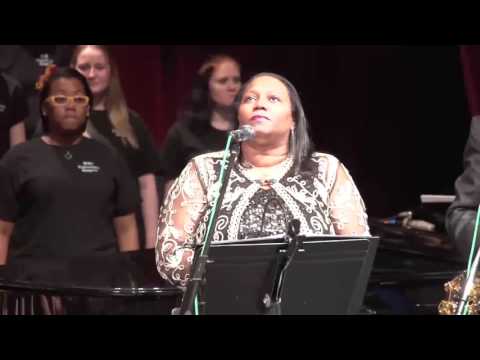
 For more infomation >> Busy first day for new Nueces County Judge Canales - Duration: 1:40.

 For more infomation >> Warmer Winds Are Making For A Wimpy Winter - Duration: 4:38.
 For more infomation >> City Council focusing on key priorities for new year - Duration: 1:36.

Không có nhận xét nào:
Đăng nhận xét