So, one of the things we have to learn about mixing paint is how each of these colours
tends to have a different bias, a different strength quality,
and that only happens through experience.
So when you're first setting out to learn oils, keep it simple.
Keep your palette small, and eventually let it get bigger and bigger and bigger.
One of the things we do here is the students do not start painting in colour.
Their very first painting is black and white.
Now, I lie a little bit, because they're given one colour with the black and white:
an earth colour.
What they have to do is they learn how to mix a neutral grey.
If it's pure black and white, it's cool, and if it's pure brown and white it's warm.
So they have to introduce the two together to find the scale in the middle that's neutral.
And that's them learning how to repeat it over and over again.
So this is neutral: it's neither warm nor cool.
Alright, so which of these do you think has the strongest tinting property?
I would say the black does.
It has the strongest influence on the other two.
Anyway, I'm going to start to go for a little grey.
I know my grey is going to be on the light range, so I need more white than I need black.
I know black is very strong, so I'm going to take the littlest amount.
Think of peppercorns, little peppercorn-sizes of paint to start mixing with, because you'd
be surprised how quickly it influences.
And you notice, already, how my value is almost the same value as your paper.
But do you notice the tint is bluer?
See, it's a little bluer.
But if I introduce a little brown, I can start to neutralize it.
See, what's great about this is you can pick it up, get it off, scrape it, push it into itself,
and really stir a nice, flat, clear mixture.
You can't do that with a brush.
You don't know how much paint is in the brush, how streaky the brush is.
See that requires a little bit more experience, to know how to pick up with your brush and
mix.
You see what I mean?
Because that's one of the culprits of why people paint muddy paintings.
They just aren't controlling their brush at all.
And they're using one brush.
Or maybe two or three, but they're going from light to dark, and it's such a dramatic difference.
And they're trying to go from red to green to yellow, and they don't realize their brush
is still contaminated with a bunch of other colours.
So this is kind of a neutral grey, isn't it, and that's all you really need for this guy, okay?
So that one will be easy to do, right?
And then if you make your one little piece, then you can start building more.
Off to the side, you can go, okay, now I need a bunch of this paint, and I'm going to keep
matching that.
See, now I'm too brown.
So then I gotta pick up more black, and then the black darkens it,
so now I gotta pick up more white.
So, let's talk about the properties of colour.
You have three, there are three things happening every time you squeeze that colour out.
Every one of these colours has a hue.
Now hue is just, what colour is it?
So this is orange, this is red, that's the hue.
It has a value.
So how dark is this orange or how light is it?
And it has chroma.
Now chroma is how bright or how dull the colour is.
Now that's the one that most students, when they're beginning to paint,
have a hard time confusing.
They confuse that with value.
So I'll say to a student, "Oh you need to lighten that colour," and they'll say, "Yeah
you're right it's not bright enough."
And I say, "No, I didn't say that.
The brightness is fine.
You need to lighten it.
You've made it too dark."
Do you see what I mean?
So when you're mixing any colour that you're seeing - either from a copy, from a photograph,
from nature - and you're trying to match that colour, and you're getting frustrated -
"Why can't I seem to get that green?
Why can't I get that red?"
It's because you haven't fulfilled those three points.
Or you haven't fulfilled one of the three points.
And so every time you go to mix a colour, ask yourself first: What hue is it?
What am I mixing?
A blue? A green?
Now that in itself is not as simple as it sounds, because there are many variations
within each clear hue.
I mean, green can come in many, many different shades of greens.
You have yellow-greens, blue-greens, red-greens.
You can say the green is cooler, warmer.
But it starts there.
Am I after a green, am I after a yellow, or am I after a blue?
Then ask yourself, how light or how dark is this green?
Then ask yourself how bright or how dull it is.
And as you're doing that, you're trying to tick off those three things.
But eventually you have to describe the colour to yourself.
So as you're mixing that hue and going, "Oh I think my green is a little too blue, it
should be yellower."
Then the moment you say that, that's you saying, "Oh I know what to do, I'll add more yellow.
I just said it, it needed to be a little more yellow."
You have to learn how to describe colour.
And then you might say, "Oh it feels too cool."
So you need to warm it up, so you go to a warm colour to warm it up, not a cool colour.
Because every colour comes in warm and cool.
You got warm yellows, cool yellows.
You got warm greens, cool greens.
Warm blues, cool blues.


 For more infomation >> FASHION SHOW GET FASHION cartoon games for children fun adventure cartoon hero Roblox Games T - Duration: 16:54.
  For more infomation >> Rainbow Station caring for sick kids - Duration: 1:34.


 For more infomation >> How to make a skirt (for beginners) - Duration: 4:43.


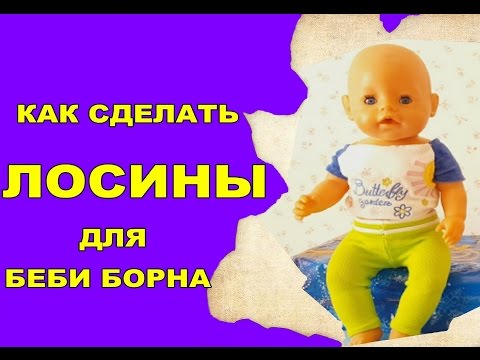 For more infomation >> ОДЕЖДА ДЛЯ БЕБИ БОН КАК СДЕЛАТЬ ЛОСИНЫ ДЛЯ БЕБИ БОН HOW TO MAKE CLOTHES FOR DOLLS - Duration: 5:51.
  For more infomation >> Ben and Holly's Little Kingdom Compilation 70 Minutes For Kids Full HD 15 - Duration: 1:10:51.

Không có nhận xét nào:
Đăng nhận xét