I hope you rested well and you're ready to take on the world.
Yeah?
So PowerPoint is an excellent vehicle for keeping a speaker on track and for giving
the listener something to visually aid what's being said and to take away after.
To reflect on.
But the limitation of PowerPoint is that sometimes you think of things that you really want to
say after the slides are already made.
And things that you need to say that you forget to say in the middle of just following the
text of a slide.
So what I thought I'd do before I start forcing myself to tend the project of the slides I'd
actually just say a little bit of context to you about what this topic means to me and
where it comes from in terms of the story of my own theological development.
So it was almost 35 years ago that Jay and Andrew and I were at seminary together in
the 80s.
And even then.
A baby he was.
He was the baby.
And even then we were being educated to understand that the world was changing.
That the church that we had grown up in was becoming a different thing.
But in that era there was still a sense that if we could figure it out and get it right
and make a new thing we could recover some of the old or at least, at least an homage
to the old in a way that we would recognize.
One of the jobs that I've had as a historian over these last 30 years is to write about
our church and to track the statistics of decline.
Now there is nothing more life sucking than that.
To look at the statistics and the economics of what decline looks like.
But at the heart of me I'm not a historian I'm a person of faith.
I'm a cradle Anglican and I love our church and I along with everybody else have been
sure that if we could just get the formula right we could turn the tide we could make
a different thing.
But I think at the end of that last 35 years story of journeying with this I've come to
the realisation that there is no turning the tide.
There is no return.
There is no looking back.
Pillar of salt and all of that.
There is only looking forward.
So then became my question: what does it mean to look forward.
I mean what is God trying to tell us with the fact that this unrelenting curve of decline
is washing over us, over these many decades.
Well I've come to settle in my own mind what I think it means and what I'm trying to communicate
to you today is what I think it means.
Now when people hear me say what I think it means they hear all different kinds of things.
So what I thought I do before I start taking you through my slides about what I think it
means for us in terms of the project of stewarding the Gospel of Jesus for this generation I
want to say clearly what I am not trying to say.
You will hear me say in this presentation: go to the world, go to the world, go to the
world.
God so loved the world.
When people hear me say that they raise the question: well what are you saying?
We're supposed to be a humanist organization—a secular organization just doing good like
all the other organizations?
What I want to say is that that isn't what I'm saying.
So if you're feeling yourself—feeling that in response to what I'm saying, wave your
hand.
Pause and ask or stop yourself from hearing that way because this is what I think.
I think that any work which is life making and contributes to the well-being of the creation
that God made and loves is a good thing.
Whether it comes from the Christian church or any other place in society.
Secular.
Humanist.
Other religious group.
What ever helps mend this world must be favorable to the intention of God.
But what I do think is that the Christians have a very, very, very, solo, unique, piece
of the story about how that happens.
One of my projects in the last 30 years has been looking at intellectual philosophical
and religious thought systems around the world.
And you know, that the Christian thought world is unique in one very particular distinct
way.
It doesn't exist anywhere else in any other thought world or religious system.
And it is the idea of forgiveness.
But not just forgiveness but free forgiveness.
Many world philosophical views don't have an idea of forgiveness at all.
We've all got responsibility, balance, justice, accountability, we've got all that.
But the idea of mercy mediated through forgiveness that we didn't have to earn is absolutely
unique to us.
So then that actually gives us, thinking of our reconciliation motif from yesterday, very
unique eyes to see the world.
It means that the person that's causing harm in our eyes, the person that's on the outside,
they don't have to find their way back in to welcome because it's already happened.
And they don't have to pay any price just the way we don't.
So because Andrew and Jay are here I want to tell an old story from many years ago from
our time together at Huron College that sets the frame for me in terms of what I think
God is about in terms of how God is reading the text of everything.
We were in about our second year, I think.
Jay and I, that meant Andrew was here behind us I guess, first year.
And we were searching for a new faculty person.
And as the young person of enthusiasm that I was.
Wait I getting my decades wrong?
Was the principal Jacob was the principal when were students wasn't he or no?
Or part of it.
OK.
Well I mean this may be slightly after maybe I spent my whole life at Huron College so
I went back to teach very soon after I left as a student.
So either it was in our era or it was immediately after because Chuck Jayco was the principal
and he knows I tell the story so he so I have his permission to share it.
So I never tell a story that I have not asked for permission for the protagonist to tell.
So he and I got into a conflict as part of the search committee process because I really
thought we should have women faculty and we had women on the search committee and we had
a couple of names we wanted.
Well the principal made the decision that we would only interview one person who was
a male candidate.
Well I was furious.
I started a boycott, you know, fighting the man.
How I like to do in those days in my feminista ways, and started a protest and nobody would
participate in the search.
And then I went to Eucharist and sat down happily waiting for the Eucharist to begin.
Now the Huron College Chapel has monastic style seating so you have to look at the people
that you're at Eucharist with.
I sat down.
Guess who came in and sat opposite me, right opposite me the principal.
The principal who had caused this.
He had no right to be here.
Who did he think he was after the harm that he had caused coming to have Eucharist just
like that along with all the rest of us.
I was really outraged.
And then in the middle of my arrogance and my self righteousness.
God spoke.
And the whole chapel was flooded with the most amazing golden light.
And I heard God say: He's my child too.
I love him too.
Well every fractured place was healed in that golden light in that moment and I saw that
and I see now that absolutely every creature that God ever made, from Hitler, to Attila
the Hun to me, is absolutely beloved as a child of God.
If God has announced forgiveness from the cross, who am I to second guess him?
So that is what I know and believe.
That we have something absolutely unique that we can offer and how we enflesh our actions
towards the well-being of the world and that is where God is calling us to go.
OK.
So now to the slides, and if you're hearing something other than that you can stop me
or comment or hear it differently.
What ever you like.
So I want us to start with the Gospel passage.
From John: For God so loved the world that he gave his only son.
So that everyone who believes in him may not perish but have eternal life.
Indeed God did not send the Son into the world to condemn the world but in order that the
world might be saved through Him.
That's where I think our stewardship orientation and posture toward the world must begin.
God loves the world.
The Christians love the world.
So I had a very interesting development fundraising related story to share with you on this very
point in terms of the intention of God.
Some of you from the Diocese of Huron may remember Bill and Kathy White.
Do you remember Bill and Kathy White?
No.
Very good lay people who held up a lot of the refugee work of the diocese for many many
years.
So here I was going back in the day a new teacher at Huron College and the students
there were amazing weren't they, Kim?
They were amazing.
They were so full of energy for making the new day.
For setting the world on fire and doing the right thing and being the best darn priests
they could be and they cared about the world.
Well there were a group of students who had a passion about poverty among children in
our diocese and in our cities.
So they said to me can we do this as our project for whatever class it was at the time I said
you that to be great.
We had this group that planned this huge event we were going to educate and raise money for
child poverty in the Diocese of Huron.
We were going to be the vanguard of a new day for helping the children come up.
We were going to do it there were six students—that a lot of students–we were not big classes
with a lot of students.
They believed in it.
We worked all term it was the end of November and the big day came.
It was our day that we had open we'd thrown open the doors wide to the diocese.
Everybody come!
We'll have the lunch!
We'll have the education!
We'll solicit donations!
And then send ambassadors back to parishes for more donations!
And we so if any one ever believed in what we were doing it was that group.
So we were so certain, we were so certain of a flood we didn't even ask for RSVPs because
we didn't want to have to turn people away so we did open the doors.
So we opened the doors that Saturday morning and a paratransit van drove up and dropped
off a young man who was quadriplegic who couldn't speak and left him there.
Well he spent the day with us we found out later that paratransit had dropped him off
at the wrong St. Michael's Church.
He was supposed to be at a program at St. Michael's Catholic church down the road but
he was there with us for the day and then in came Bill and Kathy White.
We were excited to see them, we put their name tags on all get have a coffee.
The crowds never came.
Nobody else came.
That was who came.
And we sat in a circle and we were so distressed, our energy so drained.
We had, we were going to change the world to this effort we believed and that we couldn't
even start.
None of us could start and I thought we needed to address our discouragement before we started
the program.
And Bill spoke and he said: Do you mind if I tell you a story.
So it's a two sided story because you have to see the discouragement before you see the
Bill.
So he told us a story.
And he talked about being a young man in the 1960s who had a vocation to be a teacher.
He was a teacher his whole life.
He believed with his whole heart that God was calling him to be a teacher.
He wanted that since he was a little boy.
He went to school.
He prepared.
He was going to be a great teacher.
He graduated from teacher's college and there were no teaching jobs in Ontario.
The only teaching jobs there were were across the border in Detroit.
Well any of you that remembers Detroit of the 1960s remember that those were the burning
years.
The inner downtown, the inner city was a burned out shell.
Violence and conflict everywhere.
The middle class had long ago moved out.
Well that's where the job was.
Well he decided God wanted him to be a teacher that must be where God was calling him so
he went and he had a horrific time.
He was lonely.
He experienced violence in his classroom.
He couldn't teach.
He couldn't control the kids.
He was isolated.
And he became angry with God.
What have you done?
I followed you and look where he brought me.
One day at the end of an afternoon class a young woman one of the students approached
Mr. White said: Mr. White I don't know if you're interested but we have a we have a
community church that meets on Wednesday nights just just down the way in that old Episcopalian
church down there you can see it of the window.
We meet we have supper and we pray and we do bible study maybe you'd like to join us.
So he decided he would, and he went and he joined the small black community which gathered
in a place where the Episcopalians used to be when the neighborhood was good.
And he started to come back to life.
His heart started to heal.
There was love.
There was laughter.
He felt welcome.
Some community and his his his spirit went up again.
Then one day while he was teaching in his classroom someone came by and banged on the
door and threw it open a student saying: They're burning the church!
They're burning the church!
And he ran to the window and he saw it.
The church the place of his peace and healing was going up in flames.
Down the road.
His heart felt like a stone to the bottom of him.
Hard and, angry.
He finished teaching his classes that day.
And when the school day was over his heart growing harder by the minute as he tells the
story he made his way down the street to the church.
Now a burnt out shell which was still smoldering but no longer flaming.
He was so angry.
But when he arrived he saw that members of that Wednesday night group had arrived there
before him and someone had brought a bed sheet from home and magic markers.
And on that bed sheet they had written: Go into all the world and proclaim the good news.
And they were hanging the bedsheet on the smoking portals of the burnt out church.
So Bill says to us: There is a world out there waiting.
We're here.
It's enough.
That is the frame for me that articulate the stewardship project for our generation.
Our buildings aren't there in the way they were, but the world is waiting.
And you and I?
We're here.
It's enough.
So then from that my point the Gospel implies I believe a kinship with the rest of God's
creation that summons us to go and live and work there.
Wouldn't you?
Do you know, how many of you have heard the concept of Umbutu?
Yeah.
It's a South African concept.
Desmond Tutu is the one that introduced it broadly in the Anglican community and it's
basically this notion, is says that Umbutu is really what it's about in terms of our
being human, and it means that we can't be human beings in isolation.
We can't exist alone.
We are not separate.
We are interconnected.
My pain affects you and your pain and joy affects me, and that is true not only for
the Body of Christ but for all the kinship of the creatures God made.
That's what Umbutu means.
So what we do affects the world.
And one interesting story about this which is seems like a trite story but but it isn't
for me.
So you see, I have problem hair, and when I go and I have to do a presentation I'm very
sensitive that it doesn't look proper.
It's not nice and organized.
I had to go to a peace conference in Seoul Korea and I was talking about peace and reconciliation
among Canadian Indigenous peoples in the aftermath of colonization.
And I was up the next morning to give this presentation early and horror of horrors my
curling iron didn't work.
I discovered the day before.
I thought: what am I going to do?
how will I present my hair?
Now today, many years I would just pull it into a ponytail and give the presentation.
But someone said: oh there was another Canadian, there another Canadian Anglican I won't say
more than that.
She has a curling iron with her.
Why don't you go ask?
So I went and I asked the other Canadian Anglican woman: oh I'm in a bit of a desperate situation
would you mind if I came to your room early tomorrow morning, picked up the curling iron
and prepared my hair before this presentation.
And she said: well no that would be very inconvenient.
I'm not getting up early just so you can do your hair.
I said OK.
And I took my tray, we've been in the lunch line.
I took my tray and I went and sat with a group of strangers that I had never seen before
and it turned out they were a group of women from South Africa.
And South African Anglican church actually.
And they said: what's wrong sister!
What's wrong!
You look like something terrible happened.
And I told the story about the curling iron.
Well it was amazing.
That group of five women said: well so-and-so you have a curling iron.
But, yes she was over in the other compound, not near where the Anglicans were and, over
here.
they were in three minutes, they work to plan for this curling are to go where it needed
to go through the group and to me so I didn't even have to leave my room early in the morning
because they said: You've got to speak sister, let us do this for you, we want all your energy
to go into speaking a good word.
And I said to them: well you guys are nice.
And, and one of them said: well that's Umbutu.
That's Umbutu.
Wow.
That they would care about the hair on my head as God does.
So that is where I believe we're called we can not define our stewardship mission first
as, to how we're going to survive as a church, how we're going to do our work even though
that is very sacred and important and we need to nourish each other.
But somehow the question about what God needs of us in the world I think is actually a prior
question for us.
OK so our suffering is interconnected.
I've got one other story here because it's a good Anglican story too and it's a very
meaningful one.
And I want to connect the world suffering with ours.
I'll share this story as well keeping my eye on the time.
So I was in a meeting in the mid-90s and we were all then, we leaders of the church, fully
aware of the decline, and what are we going to do, and still trying to stem the tide.
So we're is this national church meeting.
It was theological education of course, that's the meeting I was usually in.
And we're talking about what different places were doing to try and stem the tide of decline.
There was this little tykes nursery and there was this new parking lot and there was if
we promote this way if we advertise this way if we use this technology.
Everybody had lots of ideas about how we were going to rebuild, how we were going to stop
the tide and into the middle of that the one first nations woman who was there in the meeting
spoke very quietly into the middle of the circle and she said: I don't know what you
guys are talking about.
You're talking about how to grow the church.
When in my communities we're talking about how we're going to heal from our history.
And I realized in that moment that all of our communities are a part of that conversation.
The healing from our history is not only for the First Nations community of course.
It maybe even is first and foremost for all of our communities.
So the questions we ask determine the answers we find.
So in this stewardship conversation what question are we asking as the first question.
And how then will that define what we're going to see about where we can go.
So we know the church is struggling.
We know that we're declining and that's a very real thing.
We can be paralyzed by despair.
We talked about this yesterday.
I won't redo that one but we know it can be paralyzing.
But the truth of the matter is I believe that the struggles of the church and the world
are linked.
And that is the stewardship point that we're going to have a look here.
I'm going to introduce us to three, three theologians from the 20th century.
People that were flags for us, they were like beacons in the fog saying: Over here!
Church, over here!
Come this way!
And they are all people that talk about the necessary interrelationship between the well-being
of the world and the well-being of the church.
In other words they believe there is no church that is not committed to the well-being of
the world and that there is no well-being for the church without tending the project
of the well-being of the world.
So then we have our dilemma.
I think personally there are two primary dilemmas for us in terms of stewardship right now.
The biggest of them may be communication.
What do I mean by that?
Well we're out there here I am talking and you're listening and you're understanding
me.
Look the words I'm putting in your ears are dropping some place inside of you where they
can be recognized.
But if I were to go out on the street and say the same words in different contexts statistics
would show that my words would not fall inside in a place that people would receive and recognize
them.
And so for us the challenge is going to be as a stewardship project how do we communicate
because we have this Gospel that we know is not like any other, that hold the peace of
this mending the world puzzle that no one else is holding.
But if we can't communicate it in a way the world can receive it, we are lost.
So here's the basic missiological theory here.
We have to find a meeting place between the experience of the world and the gospel of
the church where something is recognizable.
Where we can communicate in a way that when the meaning is communicated it will fall inside
others in a way that they can receive and hold.
I just put this slide because I kind of like it I think it's kind of cute.
The second challenge for us is our concerns for survival are concerns for survival not
everywhere.
The big churches, the ones with endowments, some people are doing OK.
But we know that most people are not doing OK and we are preoccupied by that.
And basic spiritual wisdom of the churches: as long as we are preoccupied by our with
our selves with our distractions then we're not going to be able to attend this project
of finding that meeting place where the hurt of the world can meet the healing of the gospel
in a way that will affect the reconciliation that God intends.
One little story.
I know how long it has.
I promise they won't take too long with this is it really, there is a really striking story
from now quite a while ago 17 years ago, I arrived in Vancouver.
Now in Ontario, there still is the church.
There still is the church.
It's different than it used to be but it's still here.
But when you go to Vancouver even 17 years ago at the church there has been on the edge
of almost gone for so long.
And I showed up to preach one Sunday at a church in New Westminster and the priest—was
I still hadn't realized how different it was—it was still new.
I was still expecting there to be a church to preach to.
And the priest proudly showed me around his church.
He took me down to the downstairs and there was this little settle, was so beautiful there
were books and the toys and little wooden furniture.
It looked very dated.
I mean it looked old but it was clean and it was lovely very inviting space.
And I said: oh that's great.
Because I already knew enough to knew that children were a problem in terms of where
the children in the church.
I said to him: So you have children here, that's awesome.
And he said: Oh no!
We haven't seen a child here in this church for 20 years but we keep this ready just in
case one comes.
OK.
So we know that there is a world of hurting children out there.
And there's a place sitting right ready for them to be welcome and loved and play.
How are we going to communicate that that space is there in a way that will make a place
for them to participate in the welcome we intend.
OK so Bonhoeffer.
I just have to tell you he's, he's been the key for me in terms of trying to understand
this.
So I'm a theologian.
I love the theology of the 20th century.
I'm not going to give you a big long lecture about Bonhoeffer, Bonhoeffer, but I do want
to bring his insight into the middle of us because I think he gives us the language.
I think he articulates for us the meeting place in terms of that middle place in the
bubble where the world and we can find a way to pass our meaning across to each other.
So I don't know if you know much about Bonhoeffer but I'll just tell you a little tiny bit about
him and his story.
So he died a young man in 1945, April 1945, just before the end of the Second World War
he was executed by the National Socialists for his involvement in the resistance movement.
He was a Lutheran pastor who had been educated in Germany, Doctor of theology.
He had spent time with the Anglican community of the resurrection at Murrayfield and had
been totally inspired there with an Anglican vision of monastic life for ordinary people.
He had spent time at Union Seminary in the US where he saw the social activism of the
black church and theological communities.
So all those things affected him and he went back home and he became very upset.
You know in Germany there was a confessing church, it was a church that decided to write
the Barmen Declaration.
The clergy got together, very few courageous select clergy and said No!
Jesus Christ is Lord, Hitler is not Lord!
Because the National Socialists wanted Hitler to be the top of the church.
OK.
That's enough history lesson.
Interesting point is, it wasn't enough for him because he said: what does it mean for
us to say Jesus is Lord when they are carting our neighbours off to God knows what end?
And so he was frustrated with his colleagues that they weren't doing enough.
He was arrested he was imprisoned for about two years prior to his death.
But while he was in prison he wrote all this stuff about what it all, in all it means,
and what is the church anyway, and what is God calling of us, and and how can we make
sense of it.
And so you'll see in his writing gathered in the letters and papers from prison from
that era he talks about his vision for what the church should be and what the church's
relationship to the world and to power should be.
And it's very very moving material to read.
And if you take it all apart all those many writings you can parse that into three basic
wisdoms in terms of a frame for the Church of the future in terms of what it should be.
The first thing he said, and this is the absolute hardest one.
He says the church needs to deconstruct its relationship with power beyond self-interest.
He said that the history of Christianity has shown that so often we have been concerned
with surviving with growing with our own place with our own power with our own status our
own traditions that we have actually made our decisions based on self interest and holding
onto power rather than taking the risk of releasing power and familiarity for the sake
of the gospel.
He's a very christocentric person.
So his basic idea is that the church should be Jesus in the world.
Jesus didn't hold on to power he gave away power.
So the church should be doing the same thing.
His—at the core of his thinking was this about the survival of the church.
And this is old Biblical wisdom writ through the centuries.
Now in the middle of our conversation this morning the one who seeks to save their life
will lose it.
And the one who loses their life for my sake shall gain it.
That was his wisdom at the heart of the model of church that he develops and it is, it is
the wisdom that we all need to hold here today, I believe.
So we deconstruct self-interest, we say: OK we're going to follow all those spiritual
disciplines we talked a bit about yesterday and we're going to make choices that are faithful
choices, we're going to let go of our need to look after ourselves, we're going to see
something else.
But if we're going to have the courage to do the hard thing, he had a really important
piece of wisdom and I don't want us to forget that.
Because there are all kinds of people that take Bonhoeffer and say he says: throw the
church out!
We don't need the church!
That's not what he's saying.
He said We don't need the church but all the world has never needed the body of Christ
more.
And the way that the body of Christ is going to have the courage to be and say and do what
God is calling us to be in the world is to stay faithful to the very traditions that
have held us up for centuries.
So he says: Never has the time been more acute for us to pray together, for us to Eucharist
together, for us to read scripture together.
He says: we don't need buildings and a lot of structure and paid folks to do that but
we need to be doing it.
So he in fact imagines a world more like a monastic community where we don't just meet
together once a week but every day.
And we shore each other up in the promise that we talked about yesterday so that we
would have courage enough, trust enough in the overwhelming presence of the grace of
God to risk living as though the Gospel were true.
So he says and we've got to practice the arcane disciplines.
We've got to pray we've got to be together we have to encourage each other with our words
and our actions and our love.
And are you Christ like we never have before.
Because only there from that mystical communion will we have the wisdom and courage to do
what God is asking of us out there in this broader world.
But here C is is the hard part.
He says that that middle peace the Missiological meeting place between us and the world.
The Gospel in the world for this generation needs to be what he calls silent proselytization.
Silent proselytization.
He says you don't need to go and say to the stranger: Jesus is Lord come on to church.
You need to go to the stranger.
Listen.
See and be Jesus as Lord into the space of need that exists there in the world.
His theory was that only action, only action in this generation where the credibility of
the church, and we know that to be true in our case now as well pretty much all over
the West for a whole variety of reasons.
The credibility of the church to act easily is very low.
But he said if we act if we enflesh the meaning of Christ crucified with our neighbours who
is not compelled by that, we know that, we know that a woman standing in line saying:
no that would inconvenience me.
Teaches me one thing.
A woman, group of women racing all over a campus to respond to my need teaches me an
entirely other thing.
So words he said really are not our forte, and that finding other ways to communicate
and to act in the world are what is going to be needed.
So then what is the church for Bonhoeffer?
He summarizes it and the last thing he ever wrote is a little six page document called
Outline for a Book.
In it he writes just before his execution about what he's going to write when he gets
out of prison and what he'll write about when he has time.
But in his last thoughts then he's very clear the church is only the church when it's there
for others.
He summons the church to engagement with the world as participation in the tasks of the
world, not quote by dominating but by helping and serving.
The church's word gains weight by example alone and we as the church are called to be
the broken body of Christ in the world no matter what it costs us.
And in his day of course that would have cost, as it did with him, the lives of the people
that journeyed with him.
But he would say: So what?
Life is a precious thing.
God knows that in God's holding it.
So if we spend our lives for the sake of the Gospel then the resurrected life in all of
its glory is is the outcome.
So he has a very almost the keenness of a young man martyr at the way he writes.
But his wisdom I think is not wrong.
OK, our stewardship challenge then this is to look beyond survival.
And our first question needs to be what does God require of us in this generation and it's
going to be big and it's going to scare us half to death.
Yesterday in the rural church workshop one of the leaders told a really important story
and I think this story is: I didn't ask permission to tell it but it was public already, so I
guess it's OK to tell it.
And which is just the example of in their diocese of a young woman with a passion for
wanting to work with young people with mental health concerns and bringing that desire into
the midst of the church and the Church wanting to find a way to help her actualize that vocation
but not being able to.
And then her leaving to find a different way to follow her passion to heal in the world.
And the speaker said we should have found a way to help her.
I think we don't need to judge ourselves with 'shoulds' right?
I mean we do what we can.
But the fact that you saw it, that's, that's the key, right?
That's the key.
That's the answer.
Who is coming to you?
What are you seeing?
It's going to ask us to actually imagine what it is God asks of us in ways we have not conceived
of before.
But I do know this, relative to the stewardship project, if we risk our life we will save
it.
The gospel community, the body of Christ will rise up insofar as it listens and heeds the
Word of God whatever that might be.
And I don't know what it is in your community, I can only tend the project of what it is
in mine.
So then I put this one, because this is just the last scripture passage and I won't read
it all but Romans 8:28 really all things work together for good in them that love God and
are called according to God's purpose.
I believe that with everything I am.
If we are trusting the best we can to follow the will of God it's going to be OK, even
though it probably won't look anything like what we hoped it would or thought it might.
OK so we will be changed I just want to say this.
When God shows up we are changed.
That there is no holding on to the old day there just isn't.
If God is in it, we will be changed from the inside to the outside.
We will be changed.
Our hearts will be changed.
Our lives will be changed.
Our structures will be changed.
They just will be.
And so instead of fighting that, I assume we're all here because we're thinking: OK!
I'm ready to jump off this cliff right into that because we don't know what's on the other
side except God of course.
No place to fall except into the arms of everlasting mercy.
So how will we recognize the will of God?
And what I've picked here is a couple of 20th century wise ones that I thought could help
us answer this question.
Because you know how do you know the will of God?
You alone do not know the will of God.
We tested in community know the will of God so how do we help our communities to test?
How do we know whether we were supposed to help that young woman with that work or not?
How do we test it?
So, the two people I've picked for us are Evelyn Underhill, an Anglican theologian from
the early 20th century and Dorothy Day a Roman Catholic theologian also from the 20th century.
Both of these are our hardworking mystics, you might say.
That in the world and also committed to to illumination.
So as with Bonhoeffer she believed that humanity, that all of us, just by our fallen nature
are effectively egocentric.
So without the help or the illumination of Christ what we see is our self first what
we need first.
That's true for us as individuals and as organizations.
She says self-interest smears the windows of humanity.
Religion itself can smear the pain.
So we put on our religion glasses right?
Put on our religion glasses she says, and oh we can't see.
So we need to take off our religion glasses and put on our Body of Christ glasses and
see the world differently.
Because seeing through the eyes of Christ, the eyes of God, the heart of God gives us
a very different read on the world and what's required of us.
So the goal of the spiritual life she says is self simplification.
In other words, living beyond the illusion of multiplicity and complicated self-interest.
In other words, said more simply: It's not hard.
God is love.
God is forgiveness.
God is life.
It's that simple.
Live that.
That's the vocation.
So we have a lot of qualifications.
Well there's this and there's that, but he did this and I need that, well what about
this.
She would say all of that is illusion and all of it is dross that needs to just be released
such that we can encounter with fresh eyes the intention of God beyond our own self-interest.
So stewardship then she says very clearly is increasingly complicated in the modern
era.
She gives us that.
And she argued that the movement toward living is so we understand that all life is sacred
is the way through the complication.
So if we know that all life is sacred, the geese, all the humans, every child, the fish
and the birds.
She wasn't an environmentalist but she did get that.
If all life is sacred everything that lives is holy and blessed and of God.
Everything.
Even the things that seem profane because they are of God because God made it.
Then how do we treat it differently?
It's like me and Jay go in the chapel.
Out of here.
You know who am I to say God made him.
God made the fish.
God made your enemy and the one who has harmed you.
God did.
God made it.
God knows it.
God loves it.
So says Julian of Norwich and Evelyn.
So our only stewardship responsibility then is to ensure that our way of being in the
world organizes around this knowing.
So as we buy our groceries, as we convene our meetings, as we drive our vehicles, as
we care for the children on our block and in our neighbourhood, and the prisoner, and
the prisoners down down the road in the jails down the road, like all of it.
As we make those choices coming back to our choice motif the only choice we need to make
is for life in the name of the Gospel.
I have a good fundraising story from there in terms of a successful project and which
I'll just share because it's it's a really interesting moment.
It was a shocking moment for me but a beautiful moment.
So I have to work in India.
I go around a lot of places and one of the places where working for Rennison is with
India right now.
Have any of you been to India?
Many have been?
Some have been?
So you know that life in India looks very different than it looks here.
And one of the particular areas that we're working in of course is because I have a social
work school at my at my college is with the social service agencies and projects particularly
with children.
Because children are on the very bottom of the bottom.
The children of the underclasses are on the very bottom of the bottom in India.
So I had gone up into the hills of the province of Tamilnadu.
And up in the hills of the province of Tamilnadu, it's a pretty shockingly poor area.
And the habit there with disabled children who are treated as animals, not people, has
been because families have to go and earn what living they can, that that habit in the
hills among the hill people has been to tie children up inside the dwelling places and
just leave them there all day while their families go off and find a way to make a living.
So a group of Christians in that area, in the Church of South India saw this and had
this, like, these are human beings moment.
And so even though they did not have money to pay their local pastor they made the decision:
this in this town in the hills of Tamilnadu that they would take everything they had to
try and put together a place and a centre where these children could come and have a
form of day care and be welcomed.
And in so far as it was possible learn a trade so they did that.
The pastor was the first one to say: I don't need a job.
I don't need a job earning money for this but I want to stay and help help me build
this project.So he then started earning money working in a local shoe manufacturing enterprise.
And the team gathered and everybody agreed that they would give everything extra.
This was a very poor community that they had.
And then they reached out to the international community and got more help because they were
witnesses in their own community asking for help.
The international community responded.
And now in this village in Tamil Nadu they have this center where about 200 children
come every day.
They are picked up by the volunteers of the system—it runs entirely on volunteers—and
the man who was the priest now runs the center.
But again not for a salary but for food donations to try and keep himself together and lives
there in the building.
And I said to him Why do you do this?
Why?
He was a man who had actually been abroad and had a Ph.D..
I said: why do you do this? why are you doing with this your life?
And he said: well these—I'm a human being,a nd these children are human beings.
And that's what the Gospel says.
We are human together.
And so he he's given his life for that project.
But it is possible when we set aside one set of glasses for another set to see what's in
front of us in ways where all the needs can actually be realized in a way that's transformative.
OK.
So then this is a quote from Evelyn on faith in stewardship.
Faith is not a refuge from reality.
It's a demand that we face reality.
The true subject matter of religion is not our own souls or our institutions but the
eternal God and His whole mysterious purpose and our solemn responsibility to Him through
our stewardship of his intention.
Life for all.
The Catholic Worker Movement, just to introduce you to Dorothy Day.
I'll just say a little bit about it.
It was a movement that was started, it's a pacifist movement as well, but it was really
a movement that sent an invitation to create spaces of welcome for the poor all over the
United States.
We have some here in Canada as well.
It was sparked by Roman Catholic laypeople who wanted to take their faith very seriously.
So a whole system of houses of hospitality called Catholic Worker Houses were set in
large urban areas starting in the early 20th century all all across North America.
And the purpose behind this is that the poor should be treated as human beings.
So the vision was not let's have a soup kitchen for the poor but let's live with the poor
as our brothers and sisters in a shared humanity.
And so a whole movement started that has really changed the face of the urban poor in many
many areas of North America.
And Dorothy was one of the co-founders of that.
And so I just want to talk a little bit about her wisdom as illumination for how we view
our contacts.
The Catholic Worker Movement is what she did with her wisdom in her context.
What will we do with ours?
So she says: living now is the thing.
That we need to begin with the Sacrament of the present moment.
She says in each situation, in each encounter, and in every task is the path to God.
Whether it is taking out the garbage, peeling the potatoes, anointing the dying.
In every task is the pathway to God.
It is by way of engagement.
We do not need to become different people first.
We heard that yesterday, didn't we, in our wisdom from the medieval era?
We can start this moment to add to the balance of love in the world.
And she says that really is our only stewardship responsibility.
It may mean feeding the poor, living with the poor.
It may mean protesting.
It may mean being kind to your neighbour.
May be mean meaning sharing your decision making processes in a different way.
But she says adding love to the balance of the world is what makes the Gospel and the
Good News real in every generation.
So she believes that Christian love needs to be the basis of any society.
She wasn't a pluralist.
She was a good Catholic.
She had a fairly exclusivist notion around religious belief but she didn't allow that
to exclude people from her table.
So she wasn't conversionist, but this was her core belief.
But her model is not wrong.
What she means by this is free forgiveness of God is the basis of the good society, if
you will.
So service and obedience are the path to radical liberation for all of us, she believed.
And that the Christian pilgrimage is inextricably linked to the journey of the broader community,
so what we do matters in the world.
We think often it doesn't.
But she says it does.
Because if we're not doing what we're called to do in the world the world dies faster.
Our internal transformation happens insofar as we are engaged also with the external.
We were talking about that yesterday in terms of the dialectic between the outer and the
inner.
OK so she says then stewardship of the Gospel in the 20th century, which is when she lived,
meant active faith.
Which means: So we've got active faith, active love, active devotion.
Not all the same thing.
For her, she really thought she was not a good person.
She did.
She really...
If you read her journals she was always screwing up she thought.
She was always so imperfect.
She was so... she... she never did her love easily.
So she said every day, every hour, was a constant return to faith—an action if you will—will
act of faith.
Converting.
Turning around.
You know conversion means to turn around, turn back to God, turn back to God.
We got up.
We screwed up.
We turn back to God.
We turn back to God.
Over and over.
Daily.
As a community and as individuals she talked about active love.
In other words that love as a word doesn't mean much.
Bring the curling iron.
Bring the soup.
Bring, bring the friendship.
You bring the action and you find your way forward.
So hospitality.
Spiritual and Corporal works of mercy daily she said is the only way to spiritual health.
An active devotion, along with Bonhoeffer and all of them know that you cannot do this
you can't live radical love without replenishing yourself in the font of the Gospel.
You bathe there daily.
You renew yourself daily in the world and in the Eucharist.
OK.
So then if stewardship is love enacted what does it look like?
The face enacted love, I've said here, will be particular to each of you.
We know that and it must be read against the needs of the moment, which means it will change
week and month on.
So the purpose of action then is communication, and that's what I just wanted to take a little
look at.
If what we're looking for as stewards of the Gospel is a way to communicate what is in
us and what we know such that the deaf ear can hear action then propose through Bonhoeffer
and my other two mentors is the way.
That our actions will will communicate for us.
And I've defined for us three types of action that that includes in my view for this generation.
The first is political action.
Applied love in the public square.
Non-cooperation with evil, Gandhi would say.
Insistence on truth.
These are, these are the stuff of actions which reflect gospel in the political.
Personal action.
Bonhoeffer doesn't talk about this but I personally think it's huge.
It's absolutely huge.
The personal kindnesses and actions to stand with the other in the middle of their suffering
and need convert hearts in a way that that is immediate and personal and maybe more powerful
than anything else.
And then aesthetic action.
That's a big one I think for this generation.
We're living in a time which is very visual.
So aesthetic action: art in all of its forms, whether it's popular culture and visual art
through mass media or whether it's fine art or whether it's theatre or poetry.
This generation is attuned to the aesthetic and rather than saying: oh the aesthetic!
Why?
That's not bread, you know.
Well it is roses.
And I think this generation bread and roses both are the project for our leadership.
I am just about out of time but I have a story that I want to share as a way of ending.
So defining our work then.
I want to say this.
The way is not always clear.
In fact it's almost never clear.
But there is a way.
You cannot read the text of the story of the people of God and not entirely know that when
the people come down low there is always a way.
And so whether we are down low or we are up high or whether we are in the middle somewhere,
unsure God has a way that will open, if we look, and push even just a little.
And that the work for us as we are trying to midwife this kingdom of God is to actually
attune ourselves to the way that God is intending in each of us.
Because each one each one of you sitting here, a thousand fold, thousand fold actions of
love and redemption will come from your choosing.
Think.
Think of the multiplication effect of you with one act of love, not to mention the many
that I know you have already committed and will commit in the rest of your days.
So the trick then is for each of us to find as communities our community and as individuals
what the way is that the unique hearing and giftedness of us is called or summoned to
be in the world.
My daughter Anna, again, story with permission, is now in her mid-20s.
When she was a younger woman, around the age of 12, she had many many many struggles.
And she didn't fit anywhere in the world.
And she was angry at the world.
And what that meant, because she was the daughter of a single mother, it was that I took her
with me.
I traveled for my work so she would come with me.
I would take her out of school, we would take the homework, and she would come on my work
trips with me.
While this one time when she was 12, we had to go to a meeting in Atlanta.
And the deal we had was that she would come and sit through the meetings, do homework,
read a book, and then we would do something enjoyable at the end of each day.
So this one day we decided, what she had asked to do, was to go to the Civil Rights Museum,
The Martin Luther King Jr. Civil Rights Museum in Atlanta.
It's an amazing museum.
You've seen it?
So we went to the museum and she was full of her usual anger and rage at the world.
Always, always, always, just the anger.
And we got to the museum.
And we went through it.
It's amazing technology.
Lot of lights and displays and information and soun.
It's like, an amazing telling of the story of the civil rights movement.
And then, you come to the very last room in the museum.
You enter: it's dead quiet.
The lights are on but there's no sound and everybody standing in the room just quiet.
And you go in and you see there's only one object in the room.
In the centre of the room is a civil war era mule cart cordoned off with a red velvet rope.
And you read the sign and it says that the mule cart is the mule cart that carried Martin
Luther King Jr. in his burial procession.
Anna and I just stood there looking at it and she grabbed my hand like this.
And she said.
Well, I suppose if God has a place in history for a mule cart, one must have a place for
me.
And that moment became a turning.
A turning for her and for both of us towards seeing a way.
So that is absolutely what I know.
That there is a beautiful way for this generation, and that the capacity that we have in each
of us and in each of our communities to midwife the kingdom of God in ways that will change
this world is infinite.
All we need to be willing to do is take the risk of seeing and hearing and living newly.
If we take the risk of losing it all, we will find it all, which of course is new life,
unending in the Gospel of Jesus.
Thank you very much.
 For more infomation >> Premie Baby Gains Strength To Go Home Just In Time For Thanksgiving - Duration: 2:31.
 For more infomation >> Bond Set For Man Charged With Killing 'Ollie' The Dog - Duration: 2:10.
 For more infomation >> Centre for Teaching & Learning - Melanie Sedge - Duration: 2:59.


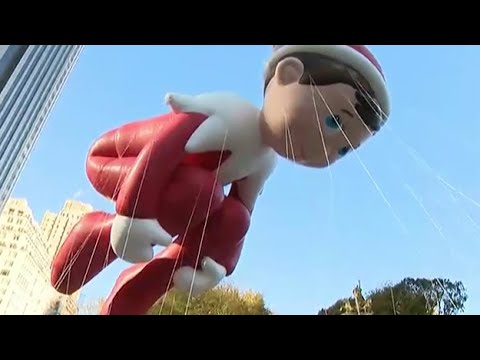 For more infomation >> Increased Security For New York's Thanksgiving Parade - Duration: 1:36.
  For more infomation >> Pumpkins, acorns and turkeys, oh my! These newborns are ready for Thanksgiving - Duration: 0:28.
  For more infomation >> Thousands show up for annual Run to Feed the Hungry in Sacramento - Duration: 6:16.

Không có nhận xét nào:
Đăng nhận xét