MODERATOR EMMA HELM: Our second speaker of the afternoon is Dr. Clayton Johnson. Dr. Johnson is a
veterinarian and director of health for the Carthage system at Carthage
Veterinary Service located in Carthage, Illinois. He is one of seven
veterinarians dedicated to the swine veterinary practice. Carthage Veterinary
Service also has a mixed animal division with a total of five
veterinarians. Prior to working at Carthage Veterinary Service Dr. Johnson
served as the Director of Health and Animal Care at the Maschhoffs, and oversaw
the Health Services program as the company expanded from one hundred thousand
to two hundred thousand sows. Areas of focus for Dr. Johnson include
bio-economic models of PRRS, PED, and Mycoplasma hyopneumoniae management
strategies, swine veterinarian development and training, development of
auditing and corrective action processes, and application of manufacturing theory
and modern swine production systems. Dr. Johnson attended the University of
Illinois College of Veterinary Medicine, receiving a doctorate of veterinary
medicine, continuing on to complete the executive veterinary program. Today Dr.
Johnson will be discussing application of batch farrowing for disease control
purposes. Please join me in welcoming our speaker.
[audience applause]
PRESENTER CLAYTON JOHNSON: All right, thank you for that
very nice introduction. Can you guys hear me okay?
I'm here today to talk to you guys about batch barrowing as a tool that could
help to improve performance enough, through decreases in clinical disease,
that it might be a viable tool for your operations. I've got some slides here
that show you the impact of disease to start with and to oversimplify which is
a very busy slide here, we have got a lot of opportunity on our sow farms and
our grow-finish farms to improve performance from the 10th percentile, so
the farms that are in the lowest performing category on this 2016 MetaFarms
report, up to the top percentiles that we've got here, and really we can do
that through better disease management. We heard that today, that
the market drivers Steve talked to us about, that's as important as
seasonality today, is disease. I want to show you guys something that a public
health professor shared with me, as I try to think through how can we ultimately
impact disease challenges and therefore profitability, and this is called the S-I-R
triangle: susceptible, infected, and resistant. You can use this for any
pathogen and any species as you think through disease control options. Much
like Paul just shared with us, you can eliminate a disease if you believe that
you can live susceptible to it, you can control disease if you think that you're
not going to be susceptible to it, but ultimately you want to minimize the
duration and impact of infection, whether that's being completely susceptible to
it or ultimately going through the infection and controlling the disease.
All animals live in this continuum somewhere. Don't think of these states as
absolutes, you can be somewhat resistant yet at the same time somewhat infected,
somewhat susceptible yet at the same time somewhat resistant, so it's not
absolutes, but where you're at in this triangle is important and with
populations, where the population exists within this triangle is extremely
important. Most animals are going to be born susceptible to most pathogens, okay,
and if we are not able to keep those animals susceptible they're gonna move
to the infected category. Paul just shared with you examples of how we can
do that with planned exposure, where we take control over the infection timeline,
the dose, and how that actually happens, but that also can happen through natural
exposure, as he shared with you as the industry's model through seeder pigs for
Mycoplasma management. That moves our pigs from susceptible into infected. Once
we're infected, we generally try to use tools that impact the disease
consequence, minimizing the clinical signs, decreasing the duration of
infection, and specifically the tools we have at our total would be medications
and vaccinations, and our goal with those is to usher the population of animals
through that infection process with as minimal of unintended consequences as
possible to get them resistant. When we think about a sow farm or a
production system perspective, if we can move our
gilts into the resistant category they will share that resistance to some level
with their piglets through the passive transfer of colostrum, and our goal at
the end of the day is trying to usher these pigs, if we can't keep them
susceptible, into the resistant category and the focus of this talk will be about
how we can use batch farrowing as a tool to help us manage that process.
Pain is the ultimate motivator, it's one of my favorite quotes. If you want somebody to
do something, pain generally helps to get that done. Positive reinforcement is a
wonderful tool, it takes a lot of positive reinforcement to make things
happen. A little bit of pain makes change happen in a hurry, and there is no
greater pain than in poor performance of our pig herds. I don't need to go through
all the information on this slide, if you guys are here today you understand that
sick pigs are major pain on your operation, and I think as our
pathogen challenges change here in the US and globally, more and more people are
asking themselves "should I think through some of my currently held dogmas, like
continuous farrowing, and evaluate their opportunity to maybe help reduce some of
the pain we've got." I want to share with you a couple of studies that demonstrate
the pain of disease challenges, and maybe where batch farrowing can be a tool
that helps it. The first study was done by Gabler, et al.
in 2013, and in this study they took a group of pigs, a cohort group of pigs,
and they put them into two different facilities, a little bigger than feeder
pigs, 30-34 kilograms, they exposed one of the facilities to a wild
type strain of PRRS. So, intentionally made half of those pigs PRRS positive
with a wild type strain of PRRS. The other population maintained a PRRS
negative status all the way through the production period, and then they measured
the performance results of both of these populations as they took them out to
market weight, which would be about 130 kilograms. The punchline from their study
was it took the animals longer to get to the final body weight, so if you're
marketing at a fixed body weight it took those animals about two weeks longer to
get to market when they were infected with PRRS, which is
kind of a "yeah, duh" type result, but there were some interesting things that they noted
in terms of when that lost gain took place, all right. You can see here that
there was also a feed conversion impact. The pigs didn't eat as much if they got
infected with PRRS, but more importantly their daily gain was impacted at a
greater level, so feed conversion, which we know is king and a lot of the
economics of sow production or pig production, was was impacted along with
the daily gain impact. This chart here shows when those performance
consequences were realized, so the black lines would be our PRRS negative
population, and you can see the average daily gain here dramatically superior in
the weeks immediately following the PRRS inoculation, and then here these pigs
caught back up and basically perform the same after an initial four-week period,
but really never compensated, never had the full compensation of getting
back to an end weight at the same time that the pigs that were never exposed
happened. You can see the the feed conversion impact, somewhat similar.
The feed conversion impact was really realized over that first four to five
week period, after that feed intake, feed conversion, average daily gain, was
relatively similar. So, conclusions from this study would be that the
duration of our disease consequence is extremely important and the more we can
tighten up that duration, the less of an economic impact the disease has. I'll show you
another study here, that's been a study that's commonly used, and really some of
the best available information that we have on co-infections. So the first study
looked at just PRRS infection in a population of animals, this was a
retrospective study that looked at multiple different infection
possibilities in populations of animals. This study was done by Cara Haden and
some other very good people, presented at AASV back in 2012, did it in
a large production system in the Midwest, was a retrospective longitudinal study,
where they went through both performance data and diagnostic reports to try and
assign a disease status to groups of growing pigs. Specifically, they looked at
PRRS and Mycoplasma, along with influenza, we're really focused on
respiratory disease, to try and understand
how much the disease status for PRRS and mycoplasma impacted the performance
of the closeouts of groups of growing pigs. So a lot of intensive work to go
back through diagnostic records and figure out which were our
baseline groups, which were the groups that didn't have any PRRS infection, no
Mycoplasma disease, no influenza disease that was diagnosed, and then
which groups fit any of the different disease categories. They could have had
just one of those diseases or they could have had multiple diseases. Then they
did statistical analysis to understand, based on the category that you landed in,
what diseases you had, how did it impact your closeouts. They summarized it
here as a difference in mortality, as well as a difference in average daily
gain. The the point that I want to make with this is that the diseases were
not additive, that was not one plus one equals two, it was often one plus one
equals three, and I've been on farms before with Paul when he talked about
Mycoplasma management and I guess you still agree with this Paul, but PRRS and
influenza, we don't always have those tigers by the tail, right, and there's a
big three: PRRS, influenza, and Mycoplasma. The punchline with this is if you can
remove a disease like Mycoplasma from the equation, you may not be just
removing one-third of the challenge, you may be taking away a significant layer
of stress and disease that results in a dramatic impact to performance
challenges. So don't let tools like bash furrowing dissuade you if you say "well,
I'm still gonna have flu or I'm still gonna have PRRS, I may still have
"Mycoplasma," just peeling back the layer of the onion one time may give you more
than what you perceive as a performance impact. In this study they were
looking at Mycoplasma impact at being 63 cents a pig, in this study, PRRS
impact is being almost $6 a pig, but when you put those two together you really
saw a tremendous exponential impact to the the cost of production, not an
additive impact. So, some summaries on the disease impact implications that we
talked about here, minimizing the duration of clinical disease has a huge
impact on minimizing our performance impacts, and ultimately the cost impacts
of those. Unstable disease, over long periods of time, is the
possible situation. Anything we can do to tighten up that disease,
make it stable in a short period of time, has huge value and remember that
susceptible, infected, and resistant triangle that ultimately means we need
to get out of the unstable category, where we have
all three of those disease types present in the same airspace, and move those
animals all to being resistant as quickly as possible, or susceptible if we
think we can keep them there. Then ultimately the tools that can increase
the percentage of resistant pigs, decreasing the percentage of susceptible and
infected pigs, is going to have tremendous value, and batch farrowing is
obviously one way you can do that. Multiple pathogens that cause disease
concurrently have more than an additive impact on each other, and so again don't
let batch farrowing dissuade you just because it may not get rid of all your
diseases, peeling back the layers of the onion one at a time may have a greater
impact than what you perceive. All right, so let's talk a little bit about batch
production, specifically. What is batch production, what are the different ways
that you can do batch production, and we'll start off with kind of the history
of batch production. When I was a young man growing up, being shopped around by
my father to various different pig farms in the neighborhood as labor, batch
production was very very common. It took advantage of the natural swine breeding
cycle, was very nice for a lot of farrow-to-finish producers that had a certain
size of barn at different production stages, and they like to fill that size a
barn all-in-all out, but they had to move based on time, essentially. The batch
production model really worked very well. It also facilitated some of the early
wean-to-finish transition, where now all of a sudden you had some bigger growing
pig barns that needed to be filled with a large population, and the batch
production allowed us to fill those barns fairly quickly. Multi-site
production and artificial insemination were two tools that came into the
industry that allows us to move to predominantly continuous farrowing.
Continuous farrowing is difficult when you don't have multi-site production to
be able to ship those weaned pigs off-site, where you're not limited by a
certain amount of nursery space that's literally right next to the farrowing
house, generally, as your only place to go with
your weaned pigs. Continuous farrowing ultimately allows you to over
produce in the farrowing house, and if you've got segregated production, with off-site
locations, all throughout the United States, you can get those pigs pushed out
to different locations, you never have that constraint of "well that's great, but
I can't farrow another ten sows right now, cause I don't have anywhere to go with the
piglets when I wean them." Artificial insemination obviously made
the breeding side of our continuous farrowing a heck of a lot easier, and
continuous farrowing obviously starts with continuous breeding, being defined
as just we're doing it every single day instead of in a tight time window. I want
to show you pictures of a couple of different farms that I worked on, and
really describe to you kind of the traditional approach to pig production,
versus our modern approach with continuous farrowing that we use today and
as we go through this think about the susceptible, infected, and resistant
categories we talked about. This farm on the left here is a traditional farm, I
spent a lot of time on this farm as a kid, and it looks a little bit different
on Google Maps now than it did when I was a kid, but I'll try and highlight
some of the different areas of the farm for you. These were dirt lots, and pigs,
sows, were gestated and bred in these dirt lots. The breeding was by
dumping boars in, sows would get popped out of the farrowing house when they
weaned, stuck them out on the dirt lot, fed them as a group, threw the boars in, the
boars did the breeding for us, pull the boars out when we wean the next group,
and move those from one lot to another. We move up now into the farrowing house,
we had one big farrowing room up here that would farrow the entire group, so as
these girls would be heavy bred, we'd go through there and use the very
sophisticated method of looking at their underlines to figure out which ones
needed to move into the farrowing house. We'd get them moved on to the gooseneck, and we'd
run them up into the farrowing house, and we'd fill up the farrowing crates, where
they'd hang out for generally about 35 days.They'd move from that farrowing house
as a group of weaned pigs, so all of these farrowing crates would farrow over
that 35 day period, they'd lactate, and they produce a weaned pig,
and we'd weaned that entire room all at once and move them into this hot nursery
right here. After that, that same cohort group would move into this grower
building, okay, so we just keep adding groups, and this
finisher actually had three sections in it, so we would move a grower group into
the finisher, and you were always pushed by your heavy breds. Your due to
farrows always push the next stage of production, so as soon as you had a group
due to farrow, you'd have to push them up here.
The reason I highlight the susceptible and infected and resistant category is
you're really talking here about all-in-all out batches of pigs, okay. So if you
think of the weaned pigs that are gonna become our market hogs, they start out as
susceptible when they're born right here in the farrowing house. We get infected,
generally at some point in the farrowing house, unstable gilts with Mycoplasma.
All the different endemic pathogens that these animals are going to see, they see
a lot of them in the farrowing house, and often very soon after birth. But, they
move through this infection process as a cohort group, and as they get out of the
nursery, especially get out of the grower, and move into the finisher we really
hope that at that point they're moving to the resistant category as a cohort
group. So, our populations are moving through this triangle together and so
you really never have subpopulations that are susceptible. Subpopulations that
are infected, then they can trade that pathogen back and forth and always serve
as a reservoir of pathogen within the population to challenge the animals.
Now let's look at continuous farrowing. This farm was actually built by this
particular producer and a group of other producers as sow centers became a
common thing, so they decided they want to get out of sow production, let's go in
together, let's build a sow center, and we'll each take weaned pigs out of there.
We've built this with a breeding and gestation barn here, a farrowing barn here,
and you can see that that's very similar to how we build modern sow farms today.
Now, the challenge with this is because all of these animals are in the same
airspace, we call a room all-in-all-out in the farrowing house, but unless we're
on true McRebel, we're generally moving litters around to tighten rooms up,
we're cross-fostering pigs, and that the reality is there's a lot of traffic back
and forth throughout this facility, and so what was very segmented production
here that facilitated all-in-all-out principles, now we've kind of moved to
truly a continuous flow type situation where within the farrowing house we have
animals of all different disease statuses present at any given time.
Now we move those animals off-site and hopefully in to wean-to-finish barns, so
hopefully we minimize that, but the punchline is in the farrowing house you've
got infected animals that are always on site.
You've got susceptible animals being born every single day and you have some
resistant, but you always have this unstable situation where your population
has animals of different categories in it at all times, okay.
Think of this room right now as an example, we're no different than the pigs, right.
There are some of us in here that may have a particular pathogen, and if we
lock the doors, we will achieve stability with a little bit of time,right. We may
all get the flu if somebody came here with flu, same thing with cold. If we lock
the doors, and we hang out in here for a little while just like our populations
with Mycoplasma, they're gonna eliminate it with a herd closure, we will eliminate
the pathogens because we'll all move in the resistant category. If we open that
door, and every day 10% of us leave and 10% of us come in, it's gonna be really
hard for us to stabilize, because there will always be some Typhoid Marys in
here that are infected and shedding a high dose of pathogen into the
environment. Think of our pig farms the exact same way. All right, so the return
of batch production. Important concept to remember here. Continuous production of
the farrowing house is going to produce the most pigs out of the sow unit, that's
very important to remember. We cannot forget that part. If your goal is to put
pigs out of your sow unit, continuous farrowing is always going to be the most
efficient way to use your farrowing crates to do that. However, depending on
your disease situation, it may not produce the most pork out of your
production system. Pounds of pork is ultimately what we sell, if you're a
wean-to-finish producer or farrow-to-finish producer, so that's
something to keep in mind. Your endemic challenges are gonna be increased with
this continuous production, okay. Your batch production will improve your weaned
pig health. Those are some basic principles that I think you can think of
with batch farrowing, all because of the susceptible and infected and resistant
triangle. Now the principles of batch farrowing were helpful to disease in the
1980s, 1970s, 1960s, and that was when we didn't have a whole host of pathogens
that we fight on a regular basis now. Even in my relatively short career, the
list keeps growing and growing of pathogens that we have to worry about,
and even pathogens that historically, maybe were there, but they weren't really
big deals and how they are big deals and we don't always have good tools to
control them from a vaccine standpoint, from an antibiotic standpoint, so we just
have to recognize that as the disease consequence becomes greater, this whole
theory that batch production improving your disease challenge, because these are
oftentimes endemic diseases in our pig populations,
it's going to have a bigger impact now than maybe even it did previously.
So I've got a benefits and negative slide here. We'll start with recognizing
some of the benefits of batch production. We've talked about how it can improve
your endemic disease control, I do think batch production can help facilitate
disease elimination, if that's a goal, whether it's a PED that popped up and
you never wanted it or whether your goal is to produce a Mycoplasma naiive
population out of a sow farm, I think that batch production can help you to do that
by stabilizing the health status of your farrowing house. I do think that batch
production can help you return to normal health after an outbreak, and I've worked
with a couple of farms that have used batch production specifically for that. I
get PRRS every year, sometimes twice a year, it drags on for months and months
and months, batch production is a way to minimize the time it takes you to get
stable and/or truly negative for that pathogen, and then this right here can be
a huge plus as we think about labor, and everybody knows how precious labor is
right now. If you've got a good breeder, if you've got a good day one person,
those people are worth their weight in gold, and if you can use those folks and
move them across more animals, because you're moving them across a facility,
leveraging their skills at breeding across a larger number of animals,
farrowing, processing, you can maximize their labor specialization, and I think
that's something that you got to think as a potential positive of batch
production. Some of the negatives, it will be less efficient use of your farrowing
crates. your farrowing crates are solid, gold, real estate in your farm. They
are the only place in your farm you can farrow an animal. I can breed an animal
anywhere on the farm. I can breed her in the GDU, I can breed her in gestation,
I can breed her in a farrowing crate. I can gestate an animal anywhere on the farm.
I can only farrow in one spot of the farm. So you should always try to look at
that as your bottleneck, and you want to make sure that farrowing crate always,
not always, that's not possible, but has pigs lactating in it as often as you
possibly can, because you want to maximize that, that will always maximize
the throughput of your sow farm. Batch production won't do that. You will have
more days of animals in your gestation, or in your farrowing crates, where they
are not lactating, or more days where your gestation, or your lactation crates
do not have animals in them, period. There's generally going to be a wean age and/or
a PSY consequence, and depending on what batch system you use, it will vary.
Some batch systems are a little more forgiving on your wean age consequence,
some are more forgiving on the throughput. Pros and cons, there's not
necessarily one that's better than the other, and then this whole labor
specialist and surges in labor needs can be seen as a con as well. If you're
an individual farm that is doing batch farrowing, and you have no ability to
rotate labor, that can be a big challenge. The days that are farrowing days, the days
that are breeding days, those are big, big days, and even on a relatively small farm,
at 2,500 head sow farm, that's a lot of animals farrowing at one time and guess
what, the animals don't know when holidays are, the animals don't know when
there's an Iowa State-Iowa football game, right. The people on the farm have
significant life impacts if they are working on a batch farrow farm and
that's the only farm that they call home, and that can be a real challenge for
people. So it can be a blessing, can also be a curse. Alright, let's talk about some
of the challenges that come up and some of the opportunities to overcome them.
Gilts are your first challenge with any batch production system. We have asked
the gilts to come into heat during the week we would like to match the breeding
cycle, they have yet to comply with that request completely. Our
opportunities to try and get around that natural variation in when they first
come into heat are to use a common gilt pool to multiple farms, and that would
absolutely be the preference, okay. So if you've got a common gilt pool,
where you can do boar exposure, you can do H & Ss, you can identify
animals in heat, then push them to the farm
that's breed week matches with their natural estrus cycle, that is a home run.
There are also some wonderful hormone technologies that are out there, that can
be used to drop animals into an appropriate breeding week as well.
Those hormones can be very effective when done absolutely correct. Same time, same day,
and that can be difficult to execute and certainly comes with some cost.
Recycles are variation challenge number two. Similar to the gilts, they do not happen
when we would ideally like them to happen, and they fall out of group often
when they do recycle and we find them as an opportunity to breed again, okay.
With batch farrowing we're all only breeding in a defined time window, so your
recycles will pop in sometimes when you're not breeding. A couple of options
that you can do there. You can certainly transfer those recycles to a different
breeding group using the hormones, just like we could with the gilts.
There's also physical movement to another farm. So if you have a sister farm where you
stagger the batch, that can be a nice tool, comes with some disease risk, but we
got to be honest with ourselves, sometimes those sister farms have the
same disease risk anyway, and then the other one is you can actually increase
your replacement rate. You can just say alright those animals that raised
their hand and recycle and tell us they are not part of the breeding herd right
now, guess what, they're likely to do that again. So you can up your replacement
rate and just say all right we're done breeding recycles, they're gonna leave
the farm when they happen. Your farrowing and breeding dates, we talked about
this a little bit already, but it will inevitably happen where you are farrowing
hundreds of animals on Christmas Day, there's nothing that you can do about
that. If you've got the ability, with multiple farms, and you'll hear this
repeated a lot, if you've got the ability with multiple farms to pod this up so
that you're sharing your labor, and you're rotating your specialists to the
farm that's doing that task at that point in time, that
can really turn this negative into a positive.
So rotating your best farrowing labor is the preferred route, if you've got
to shift labor from other parts of the farm, you're gonna have a lot of people
who are generalists on that farm. I breed this week, I farrow next week, I process
the week after that, that's a lot of technical tasks that I have to learn and
be good at, and the reality is I'm probably
never gonna be as good at all those things is if I just get to specialize in
one task. So being able to share labor, much like sharing gilts across multiple
farms, is a huge advantage if you've got that capability. Nurse sows, it is hard
to have nurse sows available in a batch production system, because you're almost
always going to target over farrowing. Because of the inefficiency that's
already present in your farrowing house, you want those crates full, you are gonna
breed more than what you normally would. You don't have any room for nurse
sows, and you don't have any nurse sows hanging out. You're not weaning animals
every couple of days to have nurse sows available. You're not farrowing animals
to have fresh sows available. So that can be a challenge. One of the
opportunities here is to use a milk deck, or a rescue deck,
throw pigs that are a couple days of age or older into it. I would tell you, if you
do that your immediate tendency will be to go pull fall backs and throw them in
there, that is a scour nightmare, do not go down that pathway. If you're gonna use
the milk decks, pick the best litter in the room, keep your litter integrity
tight, move those animals into the milk decks, take the sow you just cleaned off,
she is now your nurse sow. That will keep those milk decks from becoming an
absolute scour disaster, and really probably the only way I would recommend
using them. Okay, so now let's talk a little bit about different styles of
batches that are out there. We'll talk about four different styles of batches.
The first major difference between them is some are all-in-all-out, so the
farrowing house is all gonna farrow at one time, all gonna wean at one time.
Some are gonna be split into two groups, okay. So that's the first
difference that we'll talk about. The other is going to be the duration of the
breeding cycle, so how many days am I gonna allow the sow farm to breed across.
The more I tighten that up, the more add to some wean age, the more I also am
gonna turn my farrowing house, generally. The longer I extend that, maybe the more
breeds that I can catch, but there's a consequence to that, certainly on wean
age. So we'll talk about all-in-all-out batches first, and I'll kind of go
through these with a similar template of slides to explain them to you. A five-four
batch is when you have five groups of sows that farrow every four weeks, okay.
You'll hear this called a four week batch pretty often.
You're gonna have some wean age impact to this, some of the worst wean age
impact that you will have, because you have to turn that farrowing house completely
every 28 days, all right. Your heavy breads are coming,
you have to wean, so if they did not farrow until the end of the farrowing
group, so maybe day 5, day 6, day 7, day 8, when loaded into the farrowing house, they're
gonna have some pretty low wean age. So this model right here has the biggest
wean age impact of the all-in-all-out options. However, it's gonna be one of the
best for throughput. You're gonna be turning those crates pretty hard, and
this is always the case with wean age, it's an inverse impact to your number of
farrowings, so you're gonna turn more pigs through the farrowing house with this,
they're just going to be a lower wean age. Whether that's good or bad, entirely
up to you and your situation. To try and demonstrate to you kind of what that
looks like, in our little example farm here we've
got a farrowing house, which has got the first group that we bred. If we pretend
this is a new farm startup, and we had a whole bunch of gilts to breed on, the
first group that we bred is going to get loaded into the farrowing house first, and
so let's pretend that they're in here. The second group that we bred, which
starts four weeks after the breed day on the first group, is going to be here and
there's going to be four groups in gestation, while there's one group in the
farrowing house, and that's always the way the farm will look. You're always
going to have one in the farrowing house, four groups in the gestation. You start
your breeding cycle 28 days after the last breeding cycle ended. Just for the
purposes of trying to give you some dates, I made an assumption that you're
going to do five days of breeding, that's entirely up to you how many days of
breeding are actually going to happen. Remember, as you extend that out your
average wean age is going to go down, and particularly the young wean age pigs, the
number of those is going to go up. Your days of gestation is relatively fixed, I
did assume that you got three empty crate days, okay. So I wean, I wash, I load,
and I've got three empty crate days. That is probably your biggest opportunity to
tighten this thing up and help with that wean age impact. The more equipment and
labor you can throw at getting that farrowing house turned, the more wean age
you're going to add to that, and particularly the number of power
washers that you throw at that can have a huge impact, all right, and this assumes
you're gonna load at gestation of day 112 for all animals, as we know gilts farrow
early, so that can be a little bit of a challenge. But that's really how this
model plays out for a 5-4 batch. The next all-in-all-out option you've got is a
four five batch. So in this situation you have four groups of sows that are going
to be bred every five weeks, farrow every five weeks. Very similar to the previous
model in that your farrowing house is going to be run as an all-in-all-out
group, with one cohort of sows that get loaded in at the same time, they hang out
in there for a five-week period, then they're all weaned at the same time, and
they move out, okay. You're gonna farrow and breed generally over a longer
duration in this model. It gives you, because you've got 35 days in the
farrowing house, you've got a longer time to catch breeds for animals that come in
to heat, a little bit after day 5, day 6, day 7, day 8. You control the breeding
window, which controls your farrowing window, so you can manipulate that however you want.
You'll end up with a pretty big spread in wean age the more you extend
that breeding interval. If you tighten up your breeding window,
you'll tighten up your farrowing window to some extent as well. Same graphic, same
assumptions, except we use 10 days of breeding in this particular model, so we
gave ourselves longer to catch breeds. You've got three groups in gestation
instead of four, but you're still all-in-all-out in the farrowing house, and
you're gonna add overall wean age to this. But, you're doing that at the
consequence of the number of sows that farrow every single year, so less pigs
that go out, but more wean age on those pigs. Alright, so now let's look at when
we take our farrowing house and we don't do it all-in-all-out, we split it into
two different sections, so you've got two groups in the farrowing house at any given
time. That may not be a bad thing at all if you have two different farrowing houses.
If those are two physically different facilities you may say, well that's
basically all-in-all-out, I got different employees working in there, I'm not
tracking pathogens back and forth, I can do the susceptible, infected, and
resistant thing in two different facilities, if its all under
one roof that may be a little bit different, but probably a little less
health advantage with this, but you get a little bit more throughput kick with it.
A 10-2 batch is the first one that we'll talk about when we
split the farrowing house into two different sections. You've got ten groups
of sows that farrow every two weeks, you're gonna turn half of the crates in
a four week turn, okay. So every two weeks you're weaning, every two weeks you're
breeding, alright. Your wean age, much like the four week
model, is going to take a hit in this one, all right. You get more throughput, but
your wean age takes a bigger hit. Here you can see the graphic representation,
you've got to split your farrowing house into two different groups, one way
or another, whether that's just rooms one through ten are on this batch, rooms
eleven through twenty are on this batch, or we've got two different facilities,
either way you've got to split up your farrowing house into two different
groups, and then you've got eight groups that exist in gestation at any given
time. You are breeding on a 14 day interval, so group one got bred starting
on day one, group two got bred starting 14 days later. Same assumptions that were
used down here, for the four week batch. The last option that we will talk about
for your lactation space being split into two different groups, is a 7/3 batch,
okay. Much like the difference between the four-week batch and the
five-week batch, you get the same pros and cons. So in this situation you have a
longer window to breed your sows, you can get more sows into the group
because you just have more time to breed. You also have more time in the
farrowing house. You'll have a big variation in your wean age most likely,
especially if you push how long you're gonna catch those breeds, but you will
have your average wean age increase with this particular batch system. Here's what
this looks like physically, inside the barn,
you've got lactation split into two, just like before, longer breeding window
assumption, very similar to the comparison of the four-week and the five-week
In this situation you're going to get more wean age on these pigs, you're
gonna wean at a later time then the wean day here in the 10/2, so
you've got more wean age on those pigs, but you're doing that at a sacrifice to
throughput, okay. There's no right or wrong, all these models may be best for
your particular situation. Here's an example right here of
the transitioning from continuous production to the 5/4 batch
production. I won't go through this in any detail, . Group one, you would skip it,
so if you're gonna go to a four-week batch, group one, when they wean you just
skip them and they'll fall naturally into it. The next two groups you're going
to need to use some hormones to push them into the four-week batch, and you
can see in here you're not going to do any breeds for a four week period. You
can never recapture those breeds, all right. It may seem like a small thing in
the grand scheme of things, but you need to think about the financial consequence
of that, because the farm will start and end at the same amount of time, you're
never going to capture that four weeks of breeds again. You'll breed the animals,
just later on, okay, so there has to be some evaluation of the cost of that.
I apologize Chris, I must have sent you the bigger slide set, so I've got some case
studies in here that I will probably skip through in the interest of time,
because I know we're running late here. I will absolutely acknowledge Dr. Elise Toohill,
she's an excellent veterinarian, because she's been referenced in the
last two presentations. I worked with Elise at Maschhoff's, and we worked on a
couple of farms that we switched to batch farrowing because the disease
pressure was so great we had to do something.
They were always PRRS unstable, and as a result they always had to be flowed by
themselves. That was a disaster in the system we worked in, because we had
generally large finishing sites, so not only did you have disease unstable
animals but they would fill in a wean-to-finish barn over 5 weeks, 6 weeks,
7 weeks, and that was a horrible situation. You think about that infected,
susceptible, and resistant model, that is just a disease soup that you can't live
in. Put these farms into a batch, they're located very close to each other and
they have a common GDU, so they could take advantage of a couple of those key
principles that I referenced multiple times. They can share the gilt developer,
so they have to have less manipulation of the gilt's cycle to put them into a
breeding group, and they were able to rotate employees back and forth, we
essentially consider the two farms to be one health status. Some nice trivia on
this farm, one of the reasons why we had the the disease challenge, is this is a
packing plant, a large packing plant that does around 16,000 pigs a day, from all
over the state of Illinois. Here would be sow farm number one, about 1.7 miles
away, and here is sow farm number 2, and if that's not enough danger in and of
itself that center-pivot right there, if I
remember, correctly helped to remove some of the effluent from the packing plant,
and this direction is West, and in Illinois the wind generally comes from
the West. This is the drive into the farm and you generally got a nice spray if
you drove in at the right time, and if you were really lucky, and the wind was
right, it might actually blow the pivot on to the sow farm, which made it really nice.
But that's the reality of pig production, right? If we could go and do
all this over again we'd do some things differently. The reality is we have
multi-million dollar assets sitting there, we have to make the best possible
situation out of it, so we push to put these on a batch. I'll skip through
these real quick to kind of get you to the punchline, Elise did a nice job
of summarizing the impact to the farms, the outcome there, she's got it in
previous slides how rough some of the performance was, but we looked at the
Maschhoffs as a percent loss on a weekly basis, okay. So that's a little different
than a lot of people look at mortality, but what percentage of your growing pigs,
of all the pigs on feed within a flow, what percentage of those pigs died on a
weekly basis. That was a number we routinely looked at and we were able to
knock this down to a very acceptable level, and while 87% pigs go into a
primary market in wean-to-finish groups may not sound like a slam dunk,
best production ever, it was a massive improvement over where we had lived with
PRRS ustable production, 5, 6, 7, 8 week fills and it certainly
made life a heck of a lot better. I will apologize I'm gonna flip through
several slides here so that I don't steal your break, I definitely want to
throw in some of the lessons learned that I've gotten from going to batch
systems over time, if you can get to all-in-all-out that's gonna provide your
greatest health advantage. If you've got to farrowing houses and they are
different facilities, that may be a different story, but going to all-in-all-out
production in your farrowing house, no matter
whether you're fighting a really bad scour issue, or a reproductive deal, post-weaning,
that's going to provide the biggest health advantage. So if health is
your is your ultimate goal, make sure to keep that in mind. Your hormone program
has to be managed perfectly. Same dose, same time, every single day. If you want
to get good results, it's got to be done perfectly, and that's very
difficult to do. Make sure your employees know how sensitive it is to get that done
at the right time. You're generally gonna want to over breed, so you're gonna want
to over breed. Why? Because you're gonna have sows that farrow and die. You're gonna
have sows that farrow and don't milk, okay. They are gonna naturally remove
themselves from the farrowing house. If you're farrowing over a seven-day window,
the ones that remove themselves early can be backfilled with the ones that
were bred towards the end of that group's window, so they hang out in
gestation until close to the breaking point, then you come back fill those
crates with those last animals so that you have as full of a farrowing house
as possible. Cull your poor-performing sows.
It's really an opportunity to get those animals that raised their hand and they
say "I'm not a good reproductive performer of this herd," get them out of
the herd as quickly as possible. You can do that more aggressively here than in
continuous farrowing. If you've got the ability to rotate your labor, that is a
huge advantage. If you can take your best day one people, your best breeders, and get
them to the most number of animals on a regular basis, that's a huge advantage
and it prevents them from becoming overworked during the one week in which
their activities are going on in the batch. If you can use a common GDU, that's a
huge advantage, huge advantage, because you can push your gilts based on their
normal estrus cycle to the right breed groups, on the right farm, and then
ultimately think about the additional equipment, power washers, I can't
emphasize that enough. If we need one power washer or two power washers to wash
the farrowing house and have a three-day turn in the farrowing house today on
continuous farrowing, we need more than that on the batch, okay. Don't let equipment and
supplies be a restriction, you're gonna have lots of labor that's available
during that period of time, don't make the lack of a power washer, or certainly
not the lack of a working power washer, keep that labor from being
effective. On the little things like processing carts, everything you do
you're gonna need more of, so it may mean some of the supplies we kind of take
for granted that every farm needs one of these, or two of these, well you might
need more of those to get the same amount of work done and minimize your
downtime, which improves your efficiency. All right, batch farrowing summarizing:
it's got significant health improvements that I think we all would recognize, the
endemic disease control is going to be better,
and your epidemic disease recovery, when we get PRRS, when we get PED, we get
deltacoronavirus, will go faster and we know from those studies that the shorter
we can decrease that window of disease, the smaller the economic impact
will be. Some costs to consider if you're thinking about going to a batch, you've
got the cost of conversion, so you're not gonna breed anything for a couple of
weeks, you may have to use some hormones, you've got to think about that. You're
gonna have increased non-productive days on your batch, there's no ifs, ands, or buts
about that. Wean age impact, depending on what batch you go to, you need to value
that, and then the throughput. Again, these are generally in bursts with each
other you, can choose batch systems that are very forgiving on the wean age, they
come at a throughput consequence, and vice versa is also true. I would tell you
to make the decision, weigh your total kilograms or pounds of pork produced,
your weaned pig cost impacts based on your total pork produced, and then your
conversion cost and revenue impacts, and I know that's that's a gross
oversimplification of the math that has to be done, but ultimately those are the
things you have to account for as you consider is batch farrowing the right
thing to do for me. So with that I apologize, I that may have
taken a little bit too much time, but if there are any questions I'm happy to answer them.
[audience applause]

 For more infomation >> Taylor's House Fundraising Event For Girls In Foster Care - Duration: 2:43.
 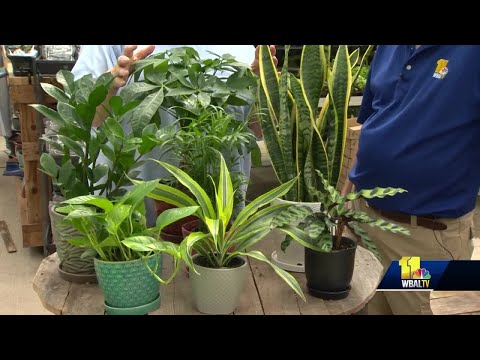 For more infomation >> What are the best plants for dorms? - Duration: 2:57.
 For more infomation >> Alexander's For Men is menswear for the modern man - Duration: 8:43.


 For more infomation >> These Boots are Made for Walking/Great Day Live 2018 - Duration: 3:19.

 For more infomation >> Teacher strike delays school for Evergreen School District - Duration: 1:26.


Không có nhận xét nào:
Đăng nhận xét